
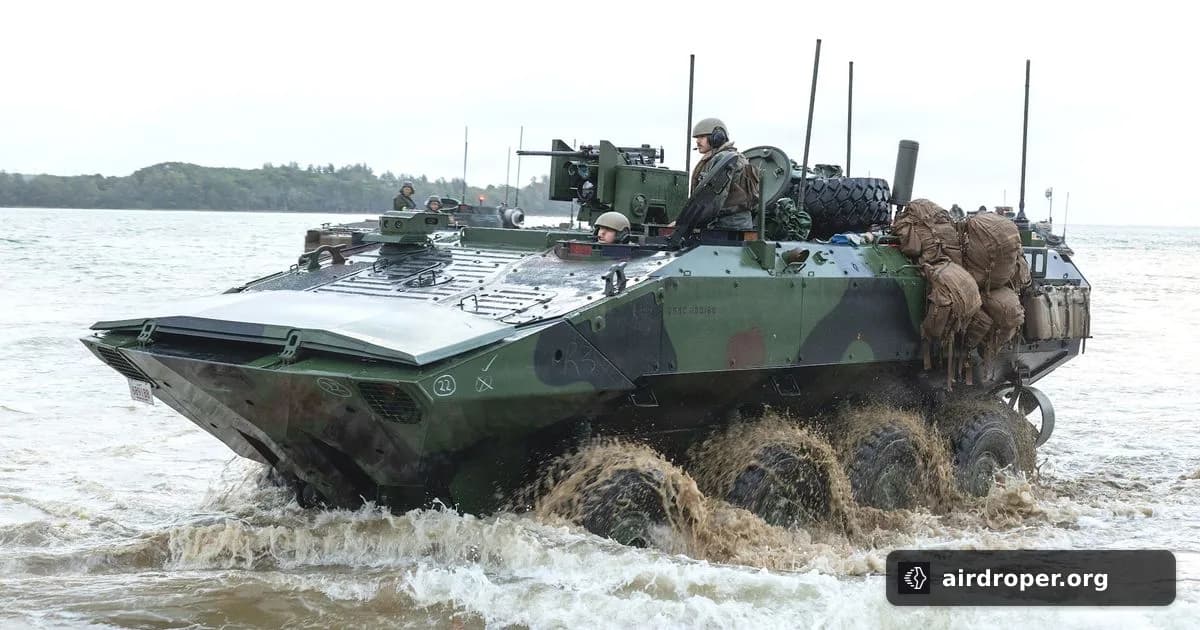
Marine Corps ACVs to Gain Active Protection Against Missiles and Drones
A new defense layer for amphibious combat vehicles
The U.S. Marine Corps’ ACV amphibious combat vehicles may soon receive a major upgrade: active protection systems. These systems are designed to detect and defeat incoming threats before they hit the vehicle, adding an important extra layer of defense against anti-armor weapons.
How active protection changes the equation
Unlike passive armor, active protection works in real time. It senses danger and reacts before a direct impact occurs. For armored vehicles, that matters in environments where enemy forces rely on guided missiles, rocket-propelled weapons, or other anti-tank munitions.
For the ACV, the value is not only about protecting the platform itself. It is also about improving the survivability of the crew and embarked Marines during landing operations, movement under fire, or maneuvering near contested areas.
Why drones matter here too
A notable point is that systems of this kind may also help against incoming drones. Their main purpose remains countering anti-armor threats, but the ability to detect and respond quickly makes them relevant in battlefields where small aerial threats are becoming more common.
That does not make active protection a replacement for dedicated counter-UAS tools. But it can become one more layer in a broader defensive setup, especially for vehicles operating close to the front line.
Why this upgrade matters now
Modern armored forces face a dense threat environment: anti-tank missiles, loitering munitions, attack drones, and short-range ambush weapons. In that reality, armor alone is no longer enough. Militaries are increasingly looking for systems that can disrupt an attack before it connects.
For an amphibious vehicle, this is especially important. It must remain mobile, support force projection from sea to shore, and still survive in areas where threats can emerge quickly and from multiple directions.
Bottom line
Adding active protection to the ACV is a practical step toward improving vehicle survivability. It will not replace armor, electronic warfare, or tactical discipline, but it can significantly improve the vehicle’s odds against modern threats — including some airborne ones.
Related Posts


Comments
Sign in to leave a comment