
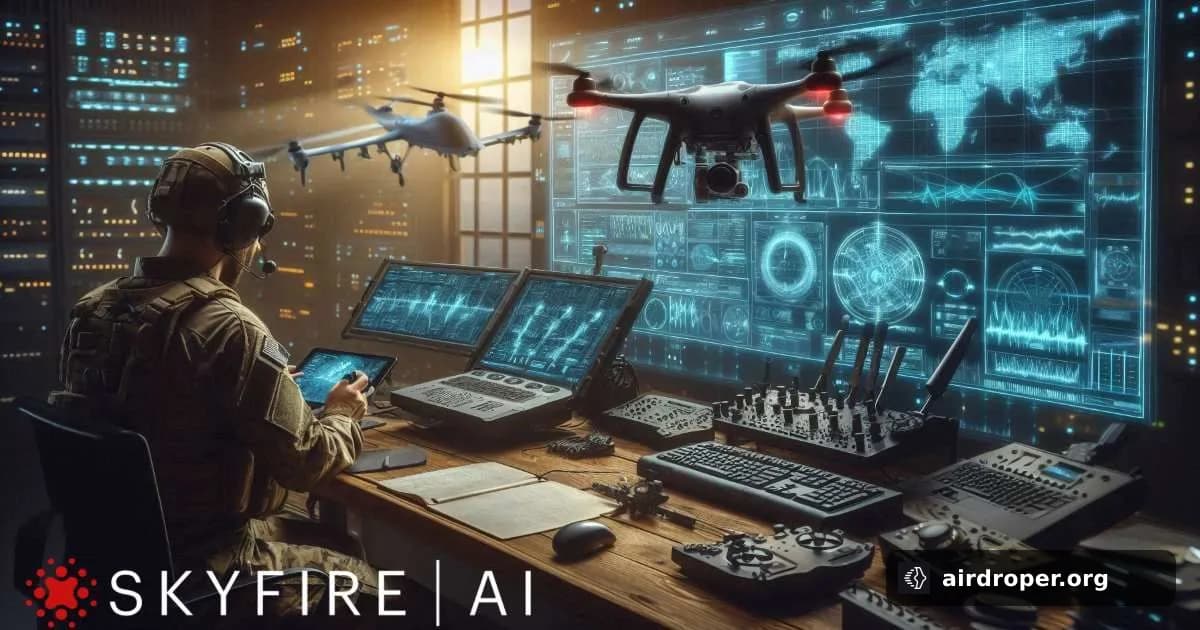
SkyfireAI raises $11M for autonomous drone coordination
Why this funding matters
SkyfireAI has raised $11 million to develop autonomous drone coordination, a clear sign that the industry is shifting its attention from individual aircraft performance to fleet-level control. The core problem is straightforward: drone operations are growing faster than the number of trained human pilots available to manage them.
That matters most in demanding environments, where speed, synchronization, and reliable decision-making can be just as important as the drone itself. As fleets expand, the old model of assigning one operator to every aircraft becomes harder to sustain. The next step is not just better hardware, but systems that can coordinate multiple drones with less direct human input.
The real bottleneck: scaling operations
For UAV makers and operators, scale has become one of the biggest practical challenges. A platform may be capable, the communications link stable, and the sensors precise, yet operations can still stall if every additional aircraft requires another person in the loop.
That is why funding around autonomy keeps attracting attention. It points to a market looking for tools that can:
- reduce pilot workload;
- improve coordination across multiple drones;
- support faster decisions in time-sensitive missions;
- expand operations without adding staff at the same rate.
Autonomy is more than an autopilot
Autonomous coordination goes beyond a standard flight controller or basic navigation aid. It suggests a system where drones can act in a shared mission framework, with less reliance on constant manual oversight. In practical terms, that means higher mission consistency and better control over multi-drone tasks.
For companies building avionics and control systems, this trend reinforces demand for smarter flight modules, resilient data links, and software architectures designed for swarm or multi-platform operation. The message from the market is clear: intelligence is becoming a core part of the stack, not an optional layer.
A broader industry shift
SkyfireAI’s funding round fits a wider pattern in UAV development. Drones are increasingly being treated as coordinated systems rather than standalone machines. That shift puts software, autonomy, and mission orchestration on equal footing with airframe design and propulsion.
In other words, the next stage of drone growth will likely be defined not by how many aircraft can fly, but by how many can operate effectively together.
Related Posts

Comments
Sign in to leave a comment