
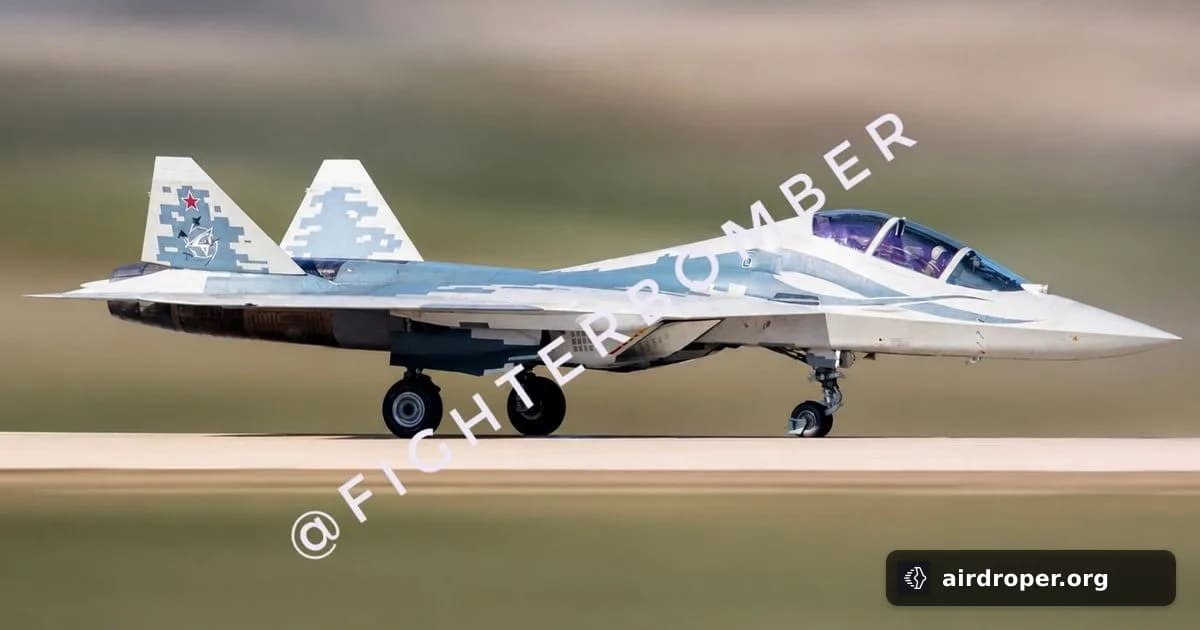
Two-Seat Su-57: What the New Variant Signals
The Two-Seat Su-57: More Than a Layout Change
Signs of a two-seat version of Russia’s Su-57 fighter have surfaced publicly, and the development matters for more than just airframe variety. A second cockpit can point to a broader shift in how the aircraft may be used in future operations.
Why Add a Second Seat
In modern combat aviation, an extra crew member is often about workload and mission complexity, not just comfort. For the Su-57, a two-seat configuration may support several roles:
- unmanned teaming, where the fighter coordinates with drones in a shared mission;
- task division between pilot and systems operator;
- more demanding sorties that require closer management of sensors, communications, or weapons.
In that sense, the new variant suggests a possible move toward a more networked operating model rather than a simple cockpit redesign.
Export Angle Cannot Be Ignored
Another likely implication is commercial. A two-seat Su-57 could be intended to widen the aircraft’s appeal on the international market. New variants often help keep a platform relevant by offering different mission packages or crew arrangements for different customers.
At the same time, the available information should be treated carefully. What has emerged so far points to a visible two-seat version, not necessarily to a fully proven production or delivery pipeline. In aviation, public appearance and operational maturity are not the same thing.
Why This Matters Beyond the Jet Itself
The wider trend is clear: crewed combat aircraft are increasingly being designed around cooperation with unmanned systems. That affects fighters, support aircraft, and the entire command-and-control chain.
For avionics and drone systems, this points to rising demand for:
- dependable communications;
- tight sensor integration;
- rapid real-time data handling;
- coordination tools that let crewed and uncrewed platforms work as one unit.
The aircraft that can manage those links effectively will have an operational advantage, especially as air combat becomes more connected and more dependent on machine-to-machine cooperation.
Bottom Line
The appearance of a two-seat Su-57 is more than a visual curiosity. It may reflect interest in unmanned teaming and a renewed push to make the platform more attractive abroad. For now, though, it remains a signal to watch rather than a finished story.
Related Posts
Comments
Sign in to leave a comment