
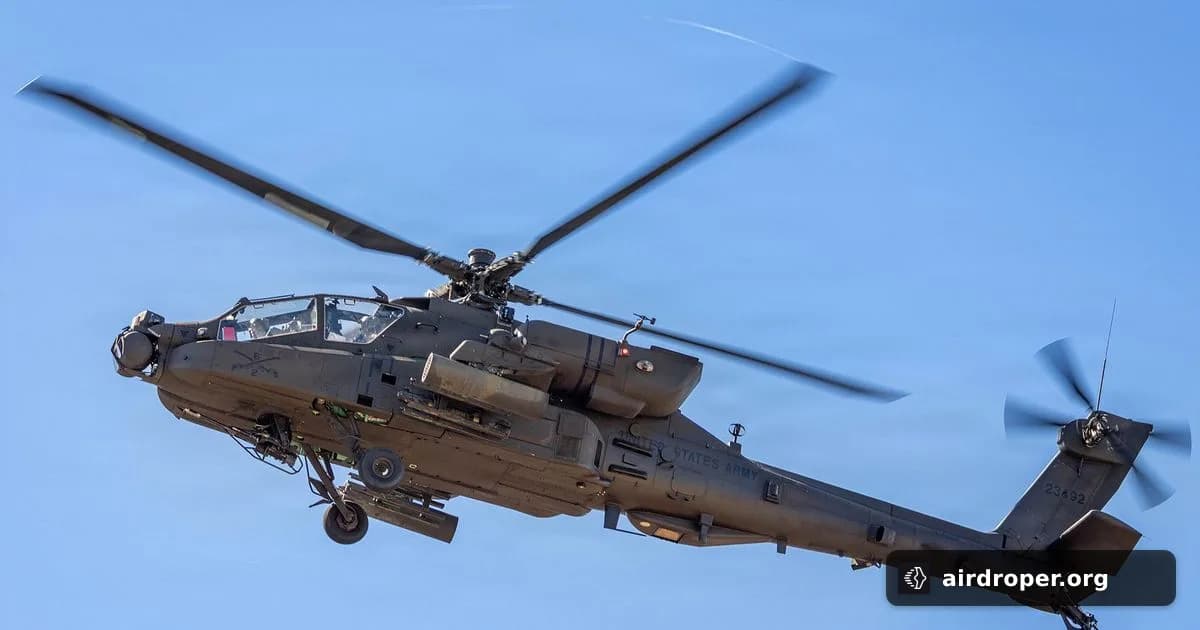
Apache Crew Rescue Shows Why Combat AI Matters
A rescue mission as a real-world AI test
The Apache crew rescue is a useful reminder that modern warfare is no longer defined only by the performance of a single aircraft or vehicle. What matters increasingly is how quickly that platform can be connected to a broader digital system. According to the Chairman of the U.S. Joint Chiefs of Staff, artificial intelligence helped troops bring together dispersed assets and organize a rapid rescue.
That point matters beyond the rescue itself. The episode shows AI being used as a coordination tool for networks of manned and unmanned systems operating over very large distances. In an environment spanning thousands of miles of water, the ability to process information and align assets fast becomes a decisive advantage.
What the case actually demonstrates
In this kind of operation, AI is not replacing commanders. It is extending their reach. The practical value is in:
- combining data from multiple sources quickly;
- coordinating unmanned systems across a network;
- reducing the time between detection and response;
- supporting decisions in a fast-changing environment.
For combat aviation, that time factor is critical. A short delay can change the outcome of a mission. The emphasis is shifting from isolated platforms to integrated systems: sensors, communications, autonomy, and human decision-makers working together as one operational loop.
Why this matters for defense industry
The broader lesson is straightforward: AI is becoming part of combat resilience, not just a convenience layer. It is most valuable when the battlefield is complex, the picture is incomplete, and resources must be moved or redirected quickly.
For defense electronics and UAV developers, this reinforces demand for systems built to operate in networks, exchange data in real time, and support autonomy where it improves speed and coordination. That is the direction modern military operations are moving toward: not simply more platforms, but better connected ones.
Related Posts



Comments
Sign in to leave a comment