
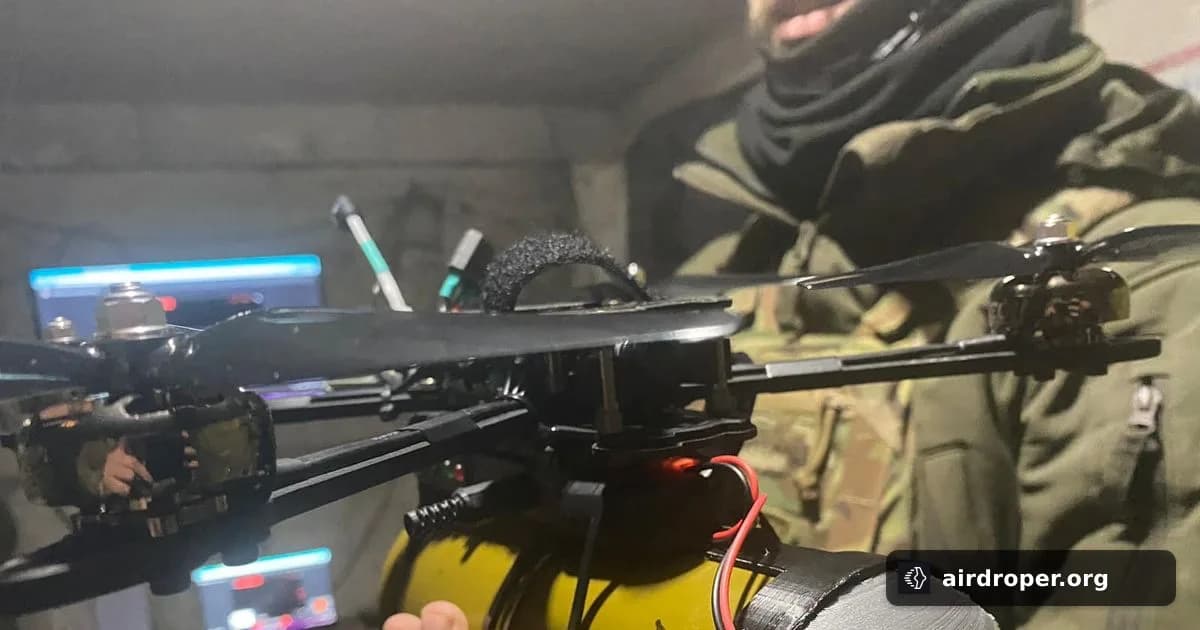
Behemoth: Ukraine’s New Medium-Range Strike Drone
A new strike category in Ukraine’s UAV sector
Ukrainian defence companies Culver Aerospace and GLEFA have introduced Behemoth, a new medium-range strike drone positioned for strategic missions. The announcement reflects a broader shift in Ukraine’s UAV industry: the move from short-range battlefield tools toward systems designed for deeper reach, greater endurance, and more demanding operational profiles.
What Behemoth represents
The available information identifies Behemoth as a medium-range strike drone. In practical terms, that places it beyond the typical short-hop platform used for immediate frontline tasks and into a category where range, mission autonomy, and navigation resilience become central design priorities.
For drones in this class, several technical factors matter most:
- reliable navigation in contested electronic environments;
- stable control links or autonomous mission execution;
- efficient energy use over longer flight profiles;
- payload flexibility for different mission requirements.
Those elements determine whether a new airframe remains a concept or becomes a useful operational system.
Why this matters for Ukraine
Ukraine’s UAV ecosystem has expanded rapidly under wartime pressure, and that development now spans the full spectrum — from compact FPV drones to larger strike platforms built for deeper operations. Behemoth fits into that trajectory. It points to a market that is no longer focused only on volume, but also on range, survivability, and mission impact.
The collaboration between two companies is also notable. In UAV development, partnerships often help accelerate the path from prototype to deployable product, especially when the system requires integration of airframe design, avionics, guidance, and payload options.
The bigger industry signal
Behemoth is another sign that Ukrainian drone makers are moving toward systems that are meant to do more than deliver a one-time strike. The direction is toward scalable platforms that can support a broader operational concept.
For the industry, the next test will be straightforward: manufacturing capacity, resistance to electronic warfare, and the ability to adapt quickly as battlefield requirements change. In that environment, the key question is no longer whether a drone exists, but how effectively it can complete its mission in the real world.
Related Posts

Comments
Sign in to leave a comment