DARPA’s XRQ-73 Quiet Flying Wing Has Flown
DARPA’s XRQ-73 takes flight
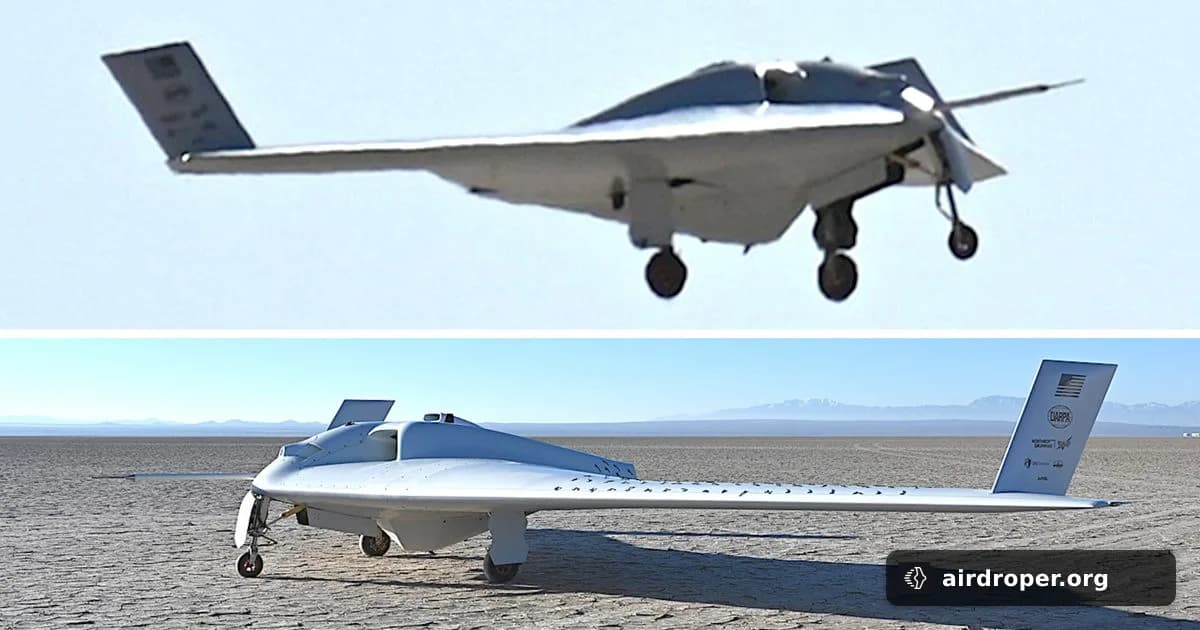
DARPA’s XRQ-73 hybrid-electric flying wing has now flown, marking an important step for a drone built around two priorities: very quiet operation and high efficiency. That combination matters because in unmanned aviation, reduced noise and lower energy use often translate directly into longer missions and a smaller chance of detection.
The aircraft has also evolved since its last public appearance in 2024, suggesting the program has moved beyond early presentation and into real-world flight testing. That shift is significant on its own. Once a prototype leaves the ground, the project stops being only a design concept and becomes a platform that can be evaluated in the air.
Why the flying-wing layout matters
The flying-wing configuration remains attractive for drone designers because it can be aerodynamically efficient. With no conventional tail and a reduced structural footprint, the airframe can potentially cut drag and make better use of available power. When paired with hybrid-electric propulsion, that efficiency can support quieter flight and more practical endurance.
This is especially relevant for military and intelligence missions, where low acoustic signature and long on-station time are often more valuable than speed. A quieter aircraft is harder to notice, while a more efficient power system can extend surveillance windows and broaden the range of mission profiles.
What is known so far
Public information on the XRQ-73 remains limited. The available details point to a flying wing designed for low-noise, high-efficiency flight, and the main confirmed milestone is that it has flown. Beyond that, specifics such as payload, range, speed, or the exact mission set have not been disclosed.
Even with those gaps, the program reflects a broader trend in unmanned systems: pushing harder on efficiency, acoustic discretion, and propulsion innovation rather than relying only on size or raw endurance.
Why this matters
The XRQ-73 is another sign that future UAV development is moving toward platforms that are harder to hear, more efficient in the air, and more adaptable to demanding operational needs. For the industry, that means more focus on airframe design, power architecture, and flight-control integration.
In practical terms, drones like this point toward a class of aircraft where stealth is not only about shape, but also about how the machine moves, sounds, and manages energy during flight.
Related Posts
Comments
Sign in to leave a comment