
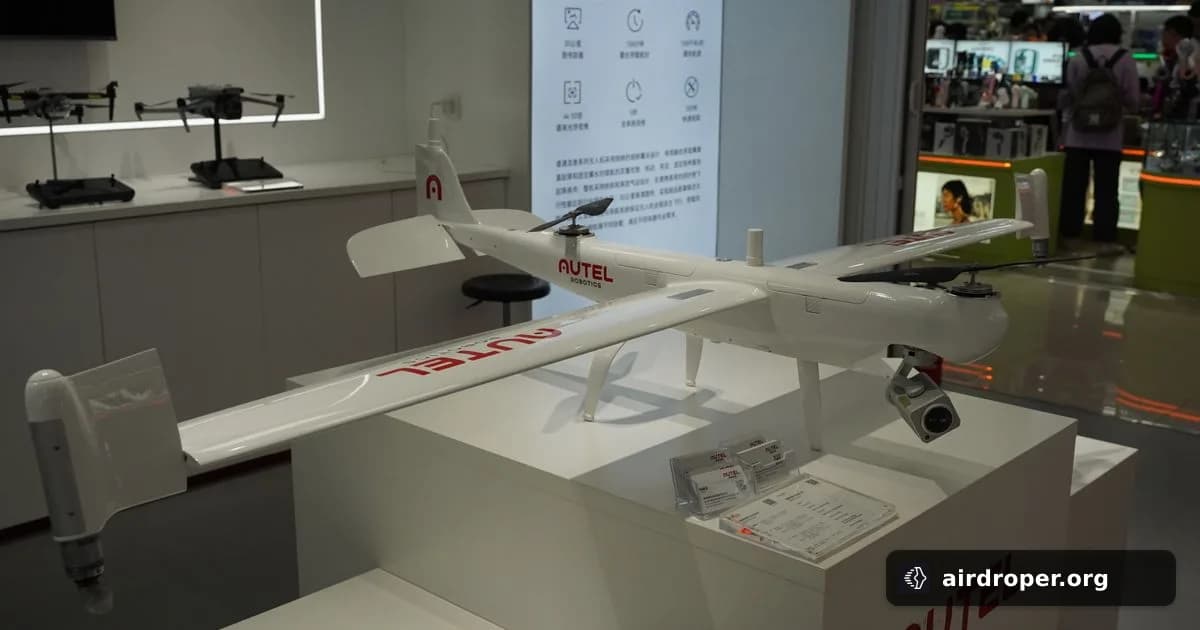
Electronic Conspicuity Is Becoming Standard
Visibility Is Part of Safe Drone Operations
As BVLOS missions and docked drone-in-a-box systems move from pilot projects into routine deployment, one expectation becomes increasingly clear: drones sharing airspace must be visible in more than just a physical sense. Electronic conspicuity is no longer a nice-to-have feature. It is becoming a basic requirement for safe integration.
The logic is straightforward. When an aircraft operates beyond the pilot’s direct line of sight, other airspace users need a reliable way to understand where it is and how it is moving. That applies to large commercial platforms, but also to smaller UAVs that now routinely fly complex routes near infrastructure, industrial sites, and other busy environments.
Why the Conversation Has Changed
BVLOS operations are changing how drone missions are designed and managed. Visual contact is no longer enough to ensure situational awareness, so operators rely on digital tools for tracking, coordination, and conflict reduction. Electronic conspicuity supports that shift by making unmanned aircraft easier to detect, identify, and account for.
This matters because drone activity is scaling faster than informal coordination methods can handle. The more UAVs enter real-world operations, the more important it becomes to standardize how they present themselves to the wider airspace picture. Without that, expansion slows down and operational risk rises.
Airspace Etiquette, Not Just Compliance
The best way to understand electronic conspicuity is not only as a technical feature or a regulatory checkbox, but as airspace etiquette. In shared skies, predictability matters. Other aircraft, operators, and systems should be able to recognize that a drone is present and respond accordingly.
That is especially important in autonomous scenarios such as inspections, perimeter security, logistics, and monitoring. In those missions, the aircraft may be executing tasks without a nearby pilot, but it is still part of a larger traffic environment. Autonomy does not remove the need to be seen.
What It Means for Builders and Operators
For manufacturers, conspicuity should be designed into the platform from the start — not added later as an afterthought. It has implications for autopilots, communications, and the overall system architecture. For operators, the responsibility is procedural: if a drone is entering shared airspace, it must be both controlled and visible.
As UAV operations mature, success will depend on more than endurance, payload, or automation. It will also depend on whether aircraft can integrate into the airspace cleanly, without adding unnecessary risk. That is why electronic conspicuity is moving from optional capability to operational norm.
Related Posts


Comments
Sign in to leave a comment