
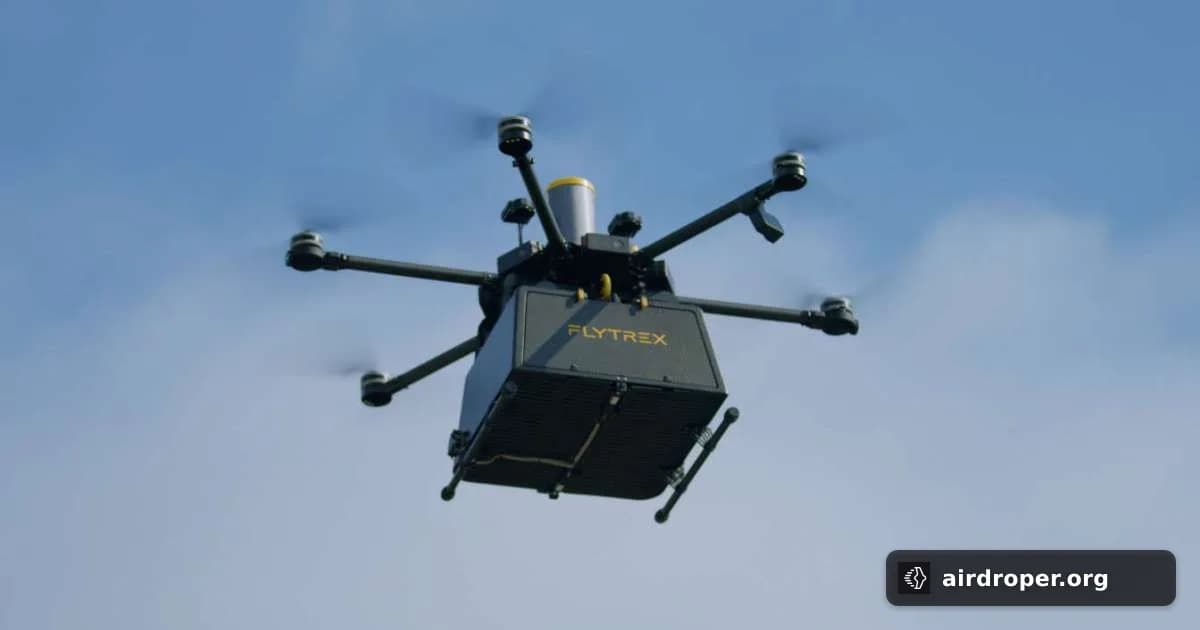
Flytrex expands shared airspace for drone delivery
Drone delivery moves toward shared airspace
Flytrex has announced another step in commercial drone delivery: the company says it has scaled a shared airspace framework that now supports nearly 10,000 overlapping flights per month with other operators. The milestone points to a more mature phase for delivery drones, where coordination matters as much as flight performance.
Why shared airspace matters
As drone delivery networks expand, the main challenge is no longer only getting packages from point A to point B. The harder task is making sure multiple operators can use the same broader operating area without creating conflicts in routing, timing, or airspace use.
A shared framework is designed to support that kind of coexistence. In practical terms, it helps operators:
- reduce mission interference;
- keep delivery schedules predictable;
- scale operations in denser service areas.
This is an important shift for the UAV sector. Delivery drones are moving beyond small pilot programs and into routine commercial operations, where reliability and coordination become core requirements.
A sign of a maturing market
The broader industry is increasingly focused on airspace management, not just aircraft capability. Range, payload, and automation still matter, but they are only part of the equation. For drone logistics to grow, operators need systems that can work alongside other airborne services in the same environment.
Flytrex’s update suggests that shared operations are becoming more practical at scale. That matters because commercial drone delivery will depend on infrastructure that can support repeated flights, multiple providers, and consistent oversight.
What to watch next
The next phase will likely depend on how well these frameworks integrate with other operators and how stable they remain in more complex airspace conditions. Key factors to watch include:
- routing reliability;
- interoperability between services;
- operational consistency;
- regulatory alignment.
For the UAV industry, this is the kind of development that matters beyond one company. It points to the infrastructure layer that delivery drones will need if they are to become a routine part of logistics rather than a niche service.
Related Posts
Comments
Sign in to leave a comment