
Ghost Shark: Australia’s Extra-Large UUV Role
A new class of undersea platform
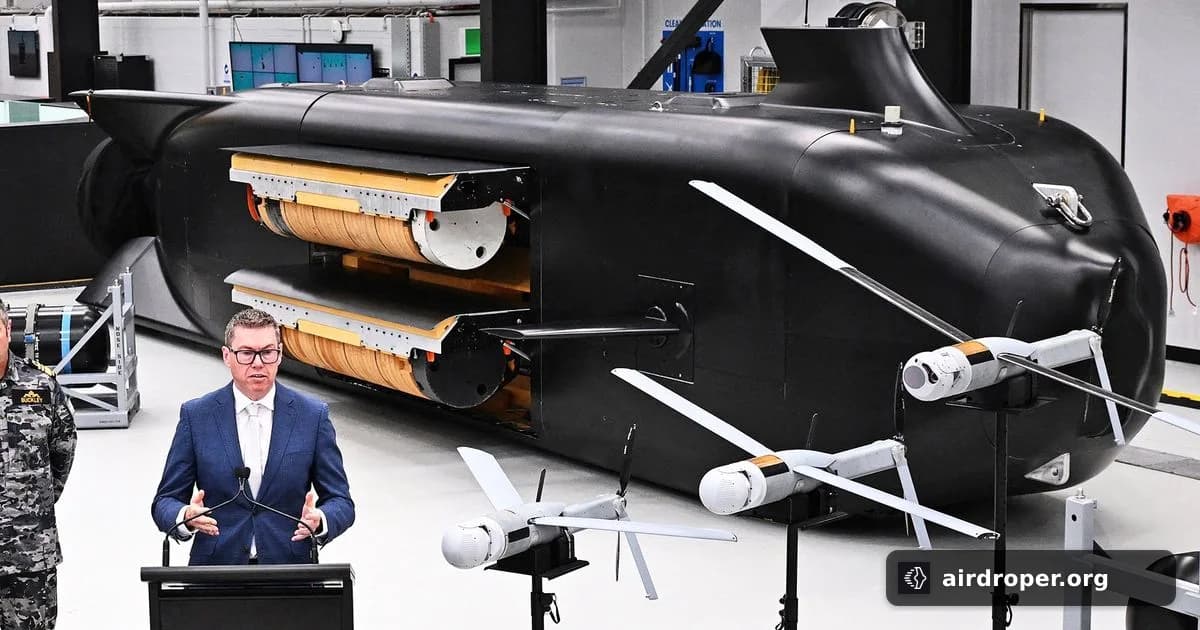
Australia is gradually revealing what its extra-large uncrewed underwater vehicle, Ghost Shark, is meant to do. Newly published imagery shows the vehicle’s payload bay for the first time, offering an important clue: this is not just a stealthy underwater scout, but a modular platform built for multiple naval tasks.
That concept matters because underwater autonomy is moving beyond simple sensing and surveillance. An extra-large UUV with internal payload volume can support a wider range of missions while staying difficult to detect and reducing risk to crewed assets.
Missions beyond reconnaissance
According to the source material, Ghost Shark is intended to support several types of operations:
- launching aerial drones;
- laying mines;
- carrying out seabed resupply missions.
Each of these roles points to a platform designed for flexibility rather than a single-purpose function. The ability to deploy aerial drones from underwater, in particular, suggests a bridge between sub-surface and airborne operations that could extend reach and complicate an adversary’s planning.
Why the payload bay matters
The first look at the payload bay is significant because internal volume is often the deciding factor in what an uncrewed underwater vehicle can actually do. A larger bay can enable modular payloads, mission-specific configurations, and the integration of different tools for attack, support, or reconnaissance.
For navies, that kind of design opens the door to distributed operations. A single vehicle can potentially contribute to sensing, deception, logistics, and offensive action without exposing a crewed vessel to the same level of risk.
What this signals for maritime autonomy
Ghost Shark reflects a broader shift in naval robotics: uncrewed systems are no longer being treated only as helpers. They are becoming carriers, launch platforms, and logistics nodes in their own right.
That evolution is important for the wider defense market because it shows how undersea systems are likely to develop next: modular, multi-role, and networked with other unmanned assets. In practical terms, the future of maritime autonomy will be shaped not just by stealth and endurance, but by how much mission complexity a platform can handle inside its hull.
Related Posts
Comments
Sign in to leave a comment