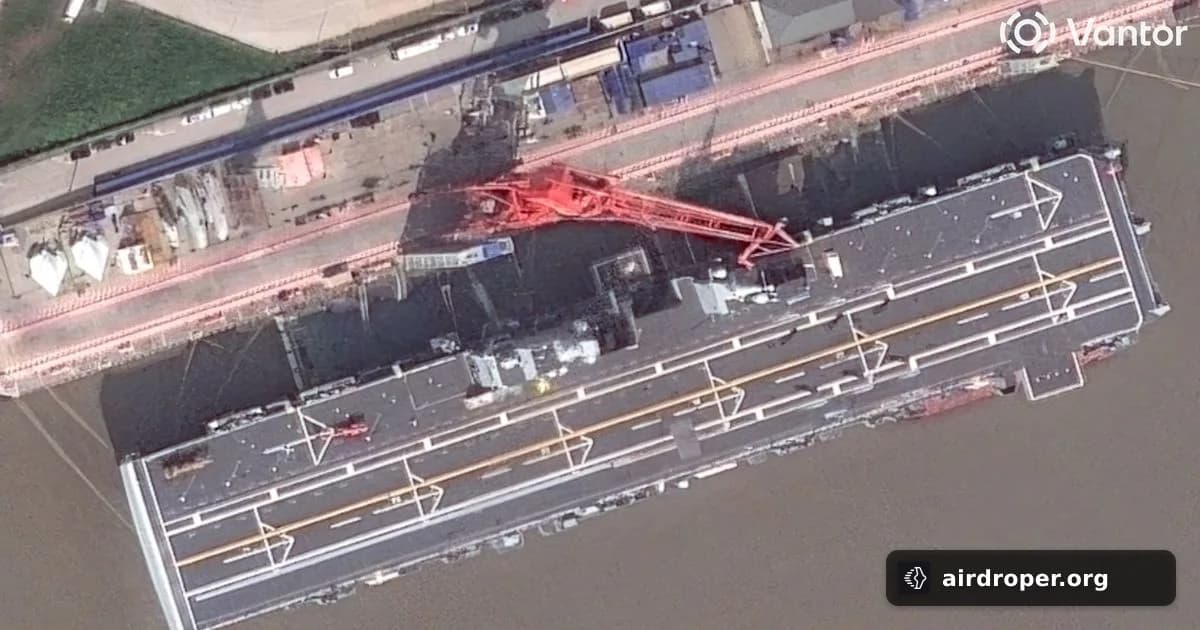
China Says GJ-21 Tested From Type 076 Ship
A notable step in China’s naval drone program
Reports from China suggesting that the GJ-21 drone has taken off from and returned to the Type 076 amphibious assault ship point to a milestone that has been building for some time. If confirmed, this would represent more than a routine test: it would signal that shipborne unmanned aviation is moving closer to operational use in the PLAN.
Why this matters
Type 076 is widely viewed as a more ambitious naval aviation platform than a conventional landing ship. That makes it a logical candidate for advanced unmanned operations, including launch and recovery at sea. For a drone, that is the real challenge: not just flying from a ship, but completing the full cycle in a demanding maritime environment.
Launch and recovery are the key words here. On a moving deck, every variable becomes harder — deck space is limited, sea conditions shift, and timing matters. A successful recovery, especially, suggests progress not only in the air vehicle itself, but also in the supporting systems: control procedures, deck operations, and the broader integration needed to make such missions repeatable.
The bigger picture
According to the source report, signs of preparation for this moment had been accumulating for more than a year. That is important because it suggests the event is part of a longer development path rather than a one-off showcase.
For the Chinese navy, ship-launched drones can expand surveillance, reconnaissance, and strike options farther from shore. They may also help reduce risk to crewed aircraft in missions where persistence or exposure would otherwise be costly.
What to watch next
Even without additional details, this test is worth noting because it reflects a broader trend: naval drones are moving from theory toward deck-qualified reality. That shift has implications for flight control, recovery systems, shipboard integration, and communications that remain stable in harsh maritime conditions.
If confirmed, the GJ-21 event would show that the next phase of naval aviation is no longer limited to manned aircraft. The ship, the drone, and the control stack are increasingly being designed as one system.