
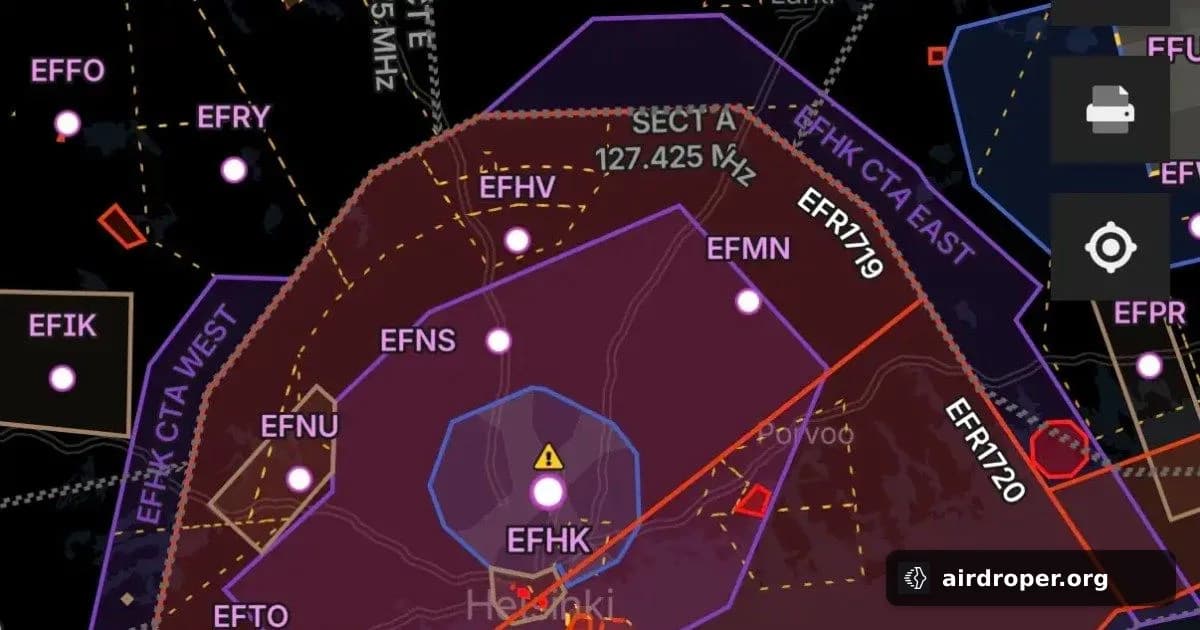
Helsinki Drone Alert: What the Incident Revealed
Helsinki’s Alert and the Problem of Unverified Threats
Finland’s recent drone alert offered a clear example of how quickly aviation security procedures can be activated when a possible aerial threat is reported. Flights at Helsinki Airport were grounded, emergency protocols were put in motion, and authorities demonstrated that they can respond decisively under pressure.
But the incident also exposed a more difficult issue: what happens when the threat cannot be confirmed? According to the source, there were no verified sightings to support the alert. That absence of evidence has fueled debate over how threat assessments are built, and whether current responses are always grounded in reliable data.
Why the Reaction Matters Beyond One Airport
This is not just an airport story. It reflects a broader tension in the UAV and counter-UAS space. On one side is the need for fast, visible action in an environment shaped by hybrid threats. On the other is the risk of overreaction, where security measures are driven by uncertainty rather than proof.
That tension matters because counter-drone systems are becoming part of public safety, national security, and commercial planning. When an alert is issued without a confirmed target, it can still trigger operational disruption, public concern, and pressure to expand detection and interception capabilities. In that environment, the line between preparedness and panic can become thin.
For drone operators, the lesson is practical: restrictions can appear quickly, and they are not always easy to predict from the outside. That makes it essential to have clear procedures, reliable situational awareness, and tools that can separate actual drone activity from false alarms.
The Bigger Picture for UAV Security
The Helsinki case highlights a structural challenge in modern airspace management. Governments are expected to react immediately to emerging risks, yet they are also expected to justify those actions with evidence. If the response is too aggressive, trust in the security framework can erode. If it is too slow, critical infrastructure may be exposed.
For the UAV sector, the takeaway is not simply that counter-drone technology is needed. It is that technology alone is not enough. Effective airspace protection depends on detection, analysis, coordination, and disciplined decision-making. The Helsinki alert shows how easily those elements can come under strain when information is incomplete and the political pressure to act is high.
Related Posts
Comments
Sign in to leave a comment