
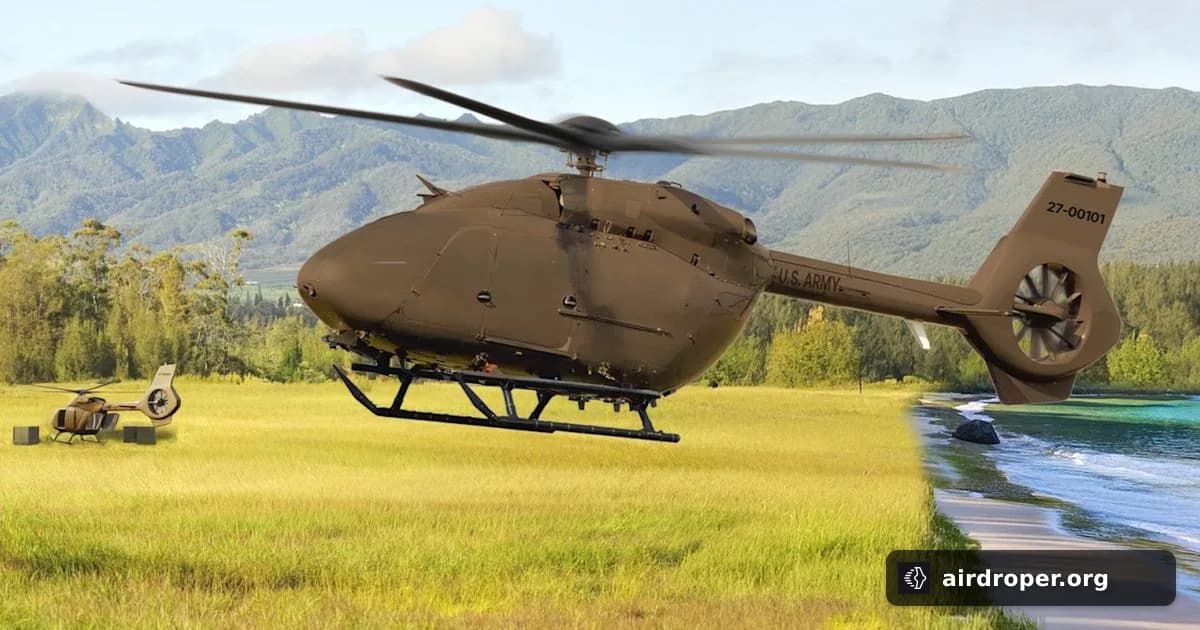
MQ-72C Cargo Drone Demo for the U.S. Army
MQ-72C and the rise of unmanned lift
The MQ-72C cargo helicopter drone is drawing attention beyond its most obvious audience. While the U.S. Marine Corps has been the main service associated with the platform, the U.S. Army also has a clear reason to look closely at it: the Army already operates the UH-72 Lakota, which makes a related autonomous logistics concept easier to understand from a force-structure perspective.
Why the demonstration matters
A capability demo is not just about showing that a drone can fly. In this case, the significance lies in proving that a helicopter-style aircraft can be adapted for unmanned cargo missions. That opens the door to transport tasks where removing the crew from the aircraft reduces exposure and operational strain.
For military users, that can translate into several practical benefits:
- less risk to personnel during supply runs;
- a better fit for dangerous or contested environments;
- more flexibility in using crewed helicopters elsewhere;
- support for routine logistics without tying up pilots.
Why the Army has a stake in it
The Army’s interest is logical. It already maintains helicopter fleets and understands the value of platforms that can move people and cargo reliably. A drone based on a familiar airframe can be easier to evaluate for maintenance, integration, and training than a completely new concept.
That does not mean unmanned cargo helicopters need to replace conventional aircraft. The more realistic near-term role is to handle repetitive, high-risk, or lower-priority missions where automation adds the most value.
What to watch next
The MQ-72C is part of a broader trend: military UAV development is no longer limited to fixed-wing aircraft. Unmanned helicopters and other vertical-lift systems are becoming more relevant as armed forces look for flexible logistics tools that do not require a pilot onboard.
The key question now is whether the MQ-72C can prove itself in real operational logistics, not just in demonstration settings. If it can, that will strengthen the case for unmanned rotary-wing aircraft as a practical part of future military supply chains.
Related Posts

Comments
Sign in to leave a comment