
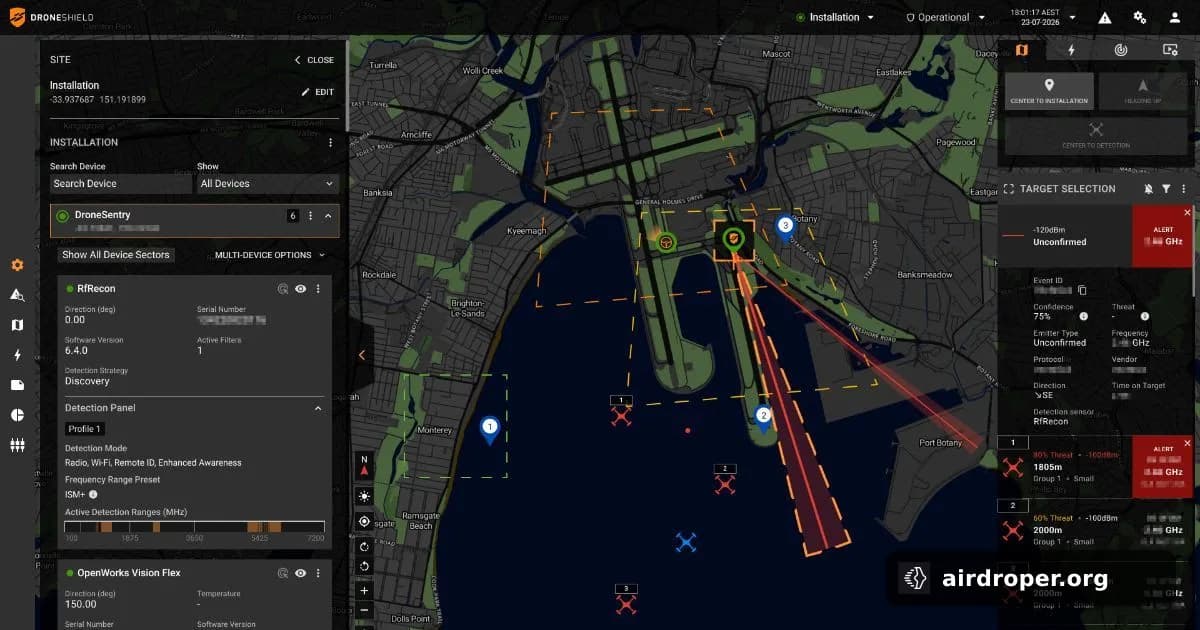
RfAI-3 and the New Drone Detection Approach
A new stage in RF-based counter-UAS
Drone detection is moving beyond simple identification of known models. As UAVs become more varied, more adaptive, and harder to classify by fixed signatures, counter-drone systems need to do more than match a device against a stored database.
That is the context behind RfAI-3, the third generation of an RF-focused detection approach in the counter-UAS space. The main idea is straightforward but important: instead of relying only on previously seen patterns, the system is designed to interpret radio-frequency behavior more broadly and spot aircraft that do not fit familiar profiles.
Why this matters
Traditional RF detection works well when a drone uses common communication patterns or well-documented frequencies. The challenge appears when a platform is new, modified, or operating in a way that does not match existing signatures. In those cases, detection depends less on recognition and more on anomaly analysis.
That shift is significant for sites that need early warning: critical infrastructure, defense users, and security teams watching over sensitive areas. A system that can highlight unfamiliar RF behavior may extend coverage beyond standard commercial drones and help identify threats that would otherwise be missed.
What “third generation” suggests
A third-generation system usually implies refinement in three areas: better handling of unknown targets, stronger classification accuracy, and less dependence on rigid rules. In counter-UAS operations, that can translate into faster decisions and fewer blind spots.
Still, RF alone is rarely enough in real deployments. The most resilient defense layers combine multiple sensing methods — for example, radar, electro-optical tools, and acoustics — so operators can confirm targets and reduce false alarms. RF analysis is a powerful part of that mix, but not the entire answer.
The bigger trend
RfAI-3 reflects a broader trend in anti-drone technology: the shift from identifying known objects to detecting unfamiliar ones. As UAV platforms evolve, security tools have to evolve with them. The next generation of detection systems will be judged not only by how well they recognize yesterday’s drones, but by how quickly they adapt to tomorrow’s.
Related Posts


Comments
Sign in to leave a comment