
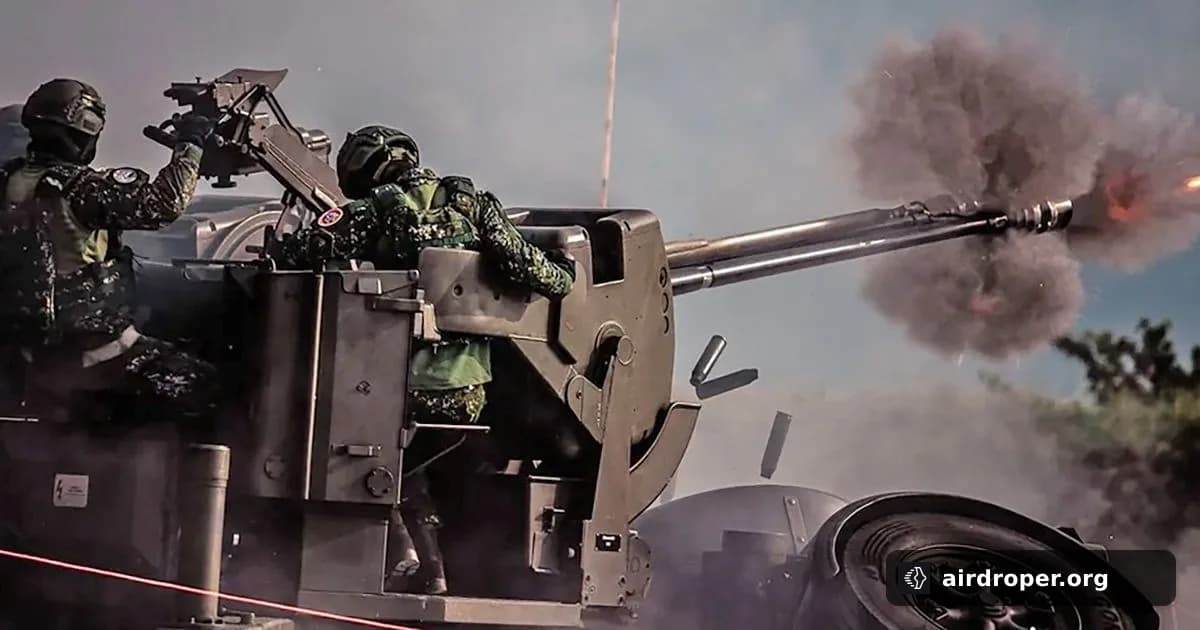
Taiwan Adds Anti-Drone Nets to Skyguard Guns
Why the nets matter
Taiwan’s Skyguard anti-aircraft guns have been fitted with anti-drone nets, a small but telling change in how air defense is being protected. The move highlights a difficult reality: systems designed to defeat airborne threats are now themselves exposed to small drones.
The purpose of the nets is straightforward. They add a physical layer of protection against a drone that may fly low, approach close, and strike vulnerable parts of the vehicle or its position. For air-defense assets, that matters because even a temporary disablement can create a gap in coverage.
A sign of a wider shift
The Skyguard upgrade is more than a local field modification. It reflects a broader trend in modern conflict, where drones are not only used for reconnaissance or strikes, but also to target the very systems meant to counter them. As a result, protecting air-defense platforms has become part of air defense itself.
That is pushing militaries toward a more layered approach: concealment, dispersion, hardened positions, and physical barriers are increasingly part of routine protection. Anti-drone nets are one of the simplest examples, but they clearly show how quickly defensive tactics are adapting.
What this means in practice
The Skyguard example is a reminder that counter-drone defense is no longer just about detecting and shooting down UAVs. It is also about survivability — keeping the defenders alive, operational, and hard to reach.
For air-defense crews, the new standard is broader than before. A system must be combat-ready, but it also has to be physically shielded from small drones that can exploit a moment of vulnerability. Often, these modest protective measures end up making a major difference on the battlefield.
Related Posts
Comments
Sign in to leave a comment