
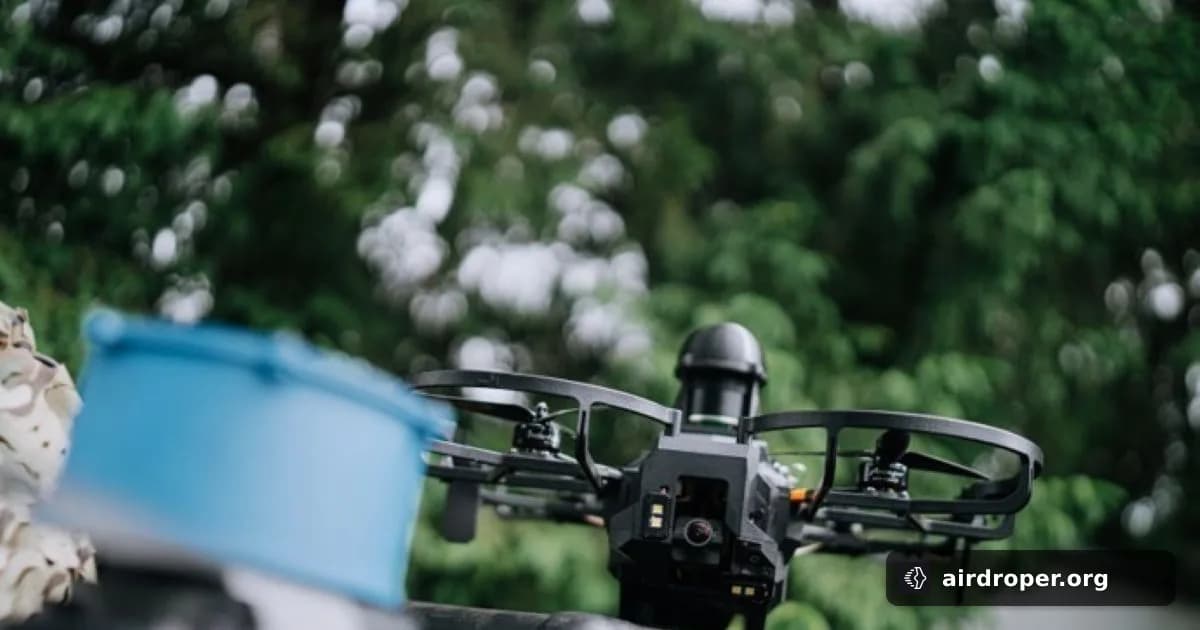
XTEND Patents Payload-Controlled Drone Steering
A patent that changes the role of payloads
XTEND AI Robotics has secured a US patent for a drone architecture that treats payloads as active decision-makers rather than passive add-ons. According to the company, the US Patent and Trademark Office has granted US Utility Patent No. 12,743,960, which covers a system where a “smart payload” can send real-time instructions to the robotic platform carrying it.
That idea matters because it shifts part of the control logic away from the drone itself and closer to the onboard module. In other words, the payload is no longer limited to sensing, recording, or carrying equipment — it can also influence how the aircraft behaves.
Why this matters for UAV design
In most drone systems, the platform makes the flight decisions while the payload performs a specific task. Cameras collect imagery, sensors gather data, and delivery modules transport cargo. XTEND’s patented concept points to a more integrated model in which the payload becomes an active part of the control loop.
For autonomous missions, that could be especially useful. A sensor package or mission module that can issue instructions in real time may help a drone respond faster to changing conditions, mission updates, or target movement. It also suggests a more modular system design, where mission intelligence is distributed across the aircraft rather than concentrated in the flight controller alone.
What to watch next
At this stage, the development is notable as a patent, not as a fielded product. Still, it reflects a broader trend in the UAV sector: smarter onboard modules, tighter data exchange, and more flexible aircraft architectures.
Key takeaways:
- payloads can become active control elements;
- real-time instruction paths may reduce separation between sensing and steering;
- modular UAV architectures may become more capable;
- both defense and civilian applications could benefit from faster onboard decision-making.
The patent does not mean this approach is already standard, but it does show where drone design may be heading. As onboard systems grow more capable, the payload may start doing more than carrying the mission — it may begin shaping it.
Related Posts


Comments
Sign in to leave a comment