
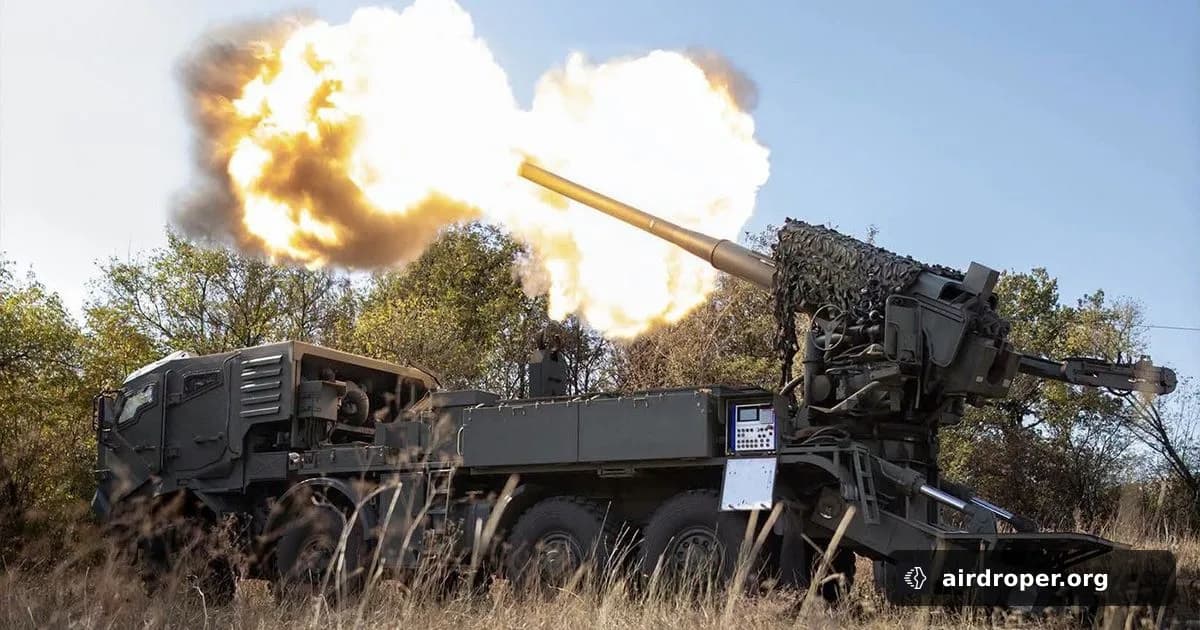
Ukraine’s Artillery in the Drone Era
Artillery has lost the spotlight, not its purpose
In Ukraine’s war, drones have changed how the battlefield works. Artillery is no longer the unquestioned center of gravity it once was. Today, its effectiveness depends much more on timely intelligence, concealment, and how well it operates alongside unmanned systems.
That does not make artillery obsolete. It still performs jobs that drones cannot fully replace: delivering sustained fire, hitting area targets, suppressing enemy positions, and supporting troops when direct fire or precision strikes are not enough.
What drones changed
The biggest shift is not simply that drones can strike targets. It is that they have transformed how targets are found, tracked, and confirmed. In practice, drones now serve as the forward eyes of artillery. They help units:
- locate enemy positions;
- adjust fire faster;
- assess strike results;
- reduce wasted ammunition.
This has pushed artillery into a more connected role. It is increasingly part of a chain that includes reconnaissance, unmanned aircraft, command nodes, and the firing unit itself. In that model, speed matters as much as range, and the ability to move data quickly matters as much as the gun system.
Why artillery still matters
Even in a drone-saturated environment, artillery remains difficult to replace. It can sustain pressure over time, work in poor weather, and engage fortified or dispersed targets in ways that drones often cannot match on their own. On a fluid front, that makes it a key tool for shaping the fight.
But the conditions for success have changed. Artillery now depends on survivability and integration. Units that cannot see the battlefield in near real time lose accuracy and responsiveness. Units that are connected to drone feeds, on the other hand, can fire faster and with greater precision.
The new artillery model
The lesson from Ukraine is straightforward: drones did not eliminate artillery. They reshaped it. The old image of artillery as a standalone dominant force no longer fits modern combat. The new model is networked, faster, and more dependent on live reconnaissance.
In that environment, artillery remains essential — not as the battlefield’s lone king, but as one part of a wider strike system built for modern war.
Powiązane wpisy

Komentarze
Zaloguj się, aby dodać komentarz