
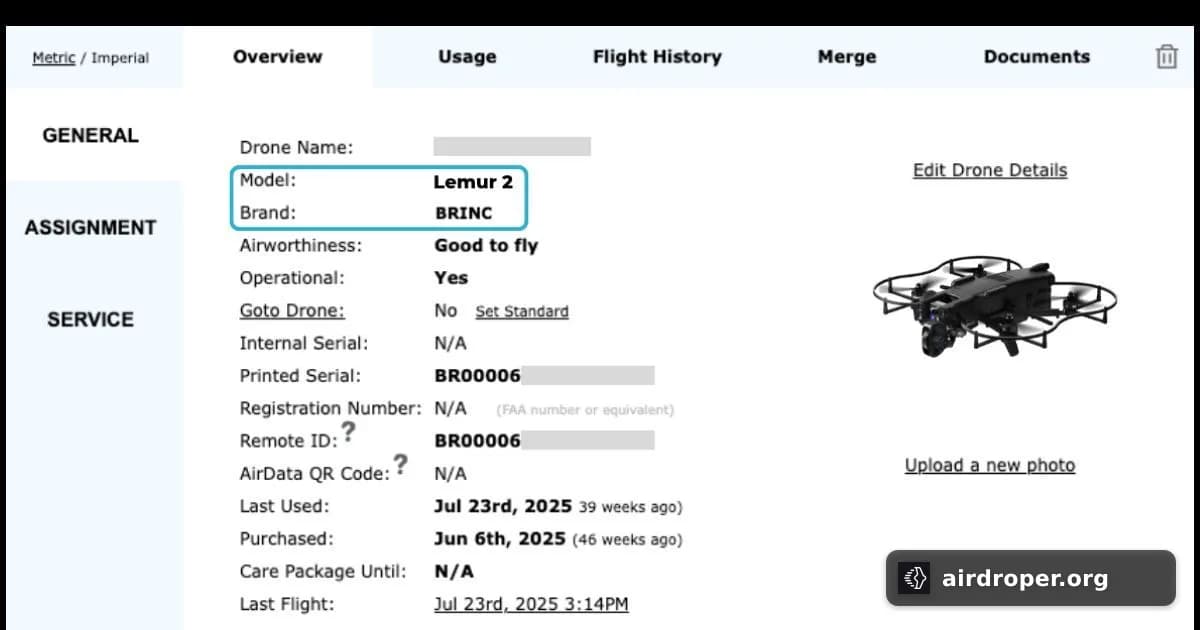
AirData and BRINC Team Up to Automate Flight Logging for Emergency Drones
Flight Logging Is No Longer Optional
As drone programs expand across US law enforcement, fire departments, and emergency response agencies, the administrative burden of mission documentation is growing alongside operational demands. Pilots working high-pressure incidents shouldn't have to worry about manual data entry the moment they land.
That's the core problem addressed by the new integration between AirData — a fleet management platform — and BRINC, which makes drones specifically designed for public safety applications.
How the Integration Works
AirData now automatically captures and organizes flight data from BRINC's Lemur 2 and Responder drones. Once a mission ends, the system handles the logging — no manual input required from the operator.
The practical benefits include:
- Hands-free flight log capture immediately after landing
- Structured mission records ready for audits, legal review, and agency reporting
- Reduced cognitive load on operators during and after high-stress deployments
- Centralized data storage across an entire drone fleet
Accountability Is Driving Demand
Public safety agencies face increasing scrutiny over how, when, and where drones are used. A missing or incomplete flight log can become a liability — especially in law enforcement contexts where mission records may be subpoenaed or reviewed internally.
Automating this process removes a common point of failure. It also ensures that documentation standards are consistent across an entire program, regardless of which pilot conducted the flight.
A Broader Industry Shift
The AirData–BRINC partnership reflects a growing pattern in the drone industry: hardware manufacturers and software platforms are building tighter, sector-specific integrations rather than relying on generic solutions.
For public safety, this vertical approach makes sense. The operational requirements — accountability, chain of custody for footage, compliance with local regulations — are specific enough that generic fleet tools often fall short.
As municipal and federal drone fleets continue to scale, automated record-keeping will likely shift from a nice-to-have feature to a baseline requirement for any serious program.
Related Posts
Comments
Sign in to leave a comment