
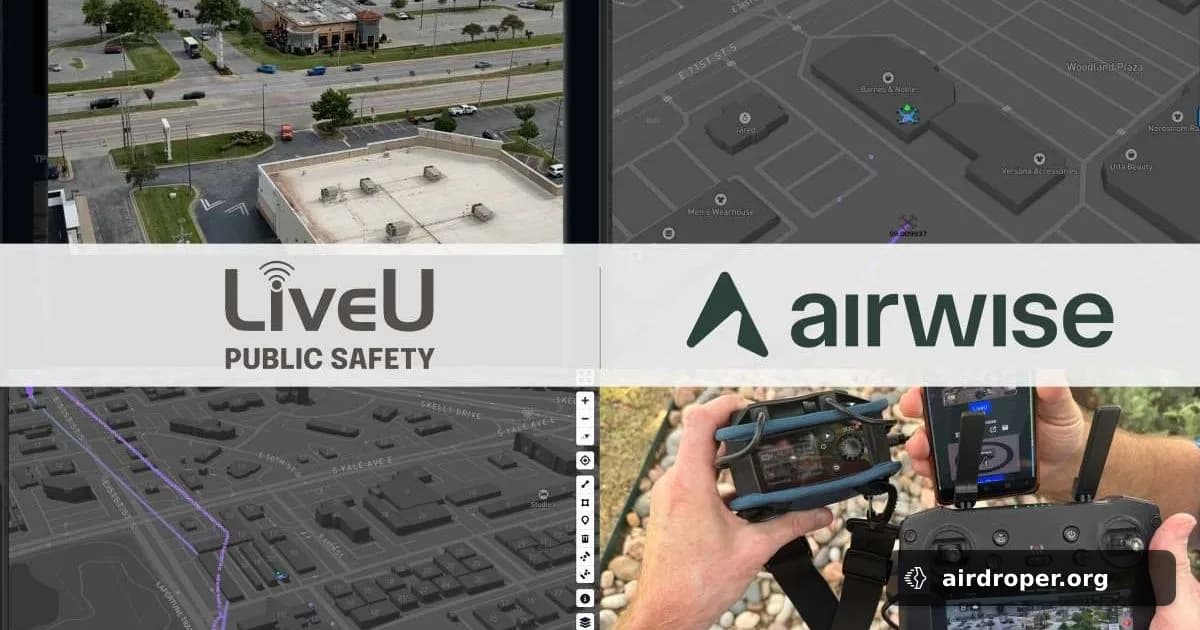
Airwise and LiveU target public-safety drone workflow gaps
Public-safety drones need more than takeoff
Fire response, search-and-rescue, and other public-safety missions increasingly depend on drones. Yet flying the aircraft is only the first step. Agencies still have to coordinate pilots, track fleet availability, manage airspace requirements, and get live video to the right teams fast enough to matter.
That broader operational problem is what Airwise and LiveU are trying to address. The point is not to add another isolated tool, but to reduce the friction that comes from handling mission-critical drone work across separate systems.
Where fragmented workflows create delays
When flight planning, crew management, fleet oversight, airspace coordination, and video distribution sit in different platforms, operations slow down. Someone has to check who is available, confirm what aircraft can be used, make sure the mission fits the airspace rules, and then push the live feed to the right people.
In public-safety settings, that extra coordination can become a real bottleneck. A drone may be airborne within minutes, but its value drops if the information it collects reaches command staff, dispatchers, or field teams too late.
The focus of the partnership
The collaboration between Airwise and LiveU centers on making the mission workflow more connected. Instead of forcing operators to jump between multiple tools, the aim is to streamline the steps that happen before, during, and after a flight.
In practical terms, that means:
- aligning flight operations with airspace requirements;
- managing pilots and drone fleets in a more organized way;
- delivering live video to the people who need it without unnecessary delay.
This does not change the core work public-safety teams perform. It does, however, make that work easier to coordinate and potentially easier to scale.
Why this matters for the market
Public-safety drone programs have moved well beyond pilot projects. The next stage is about reliability, speed, and integration. Hardware remains important, but software increasingly determines how quickly an agency can launch a mission, share situational awareness, and act on what the drone sees.
Partnerships like this point to a clear direction: the most useful drone systems for public safety will be the ones that treat planning, execution, and live data delivery as one continuous operational chain.
Related Posts
Comments
Sign in to leave a comment