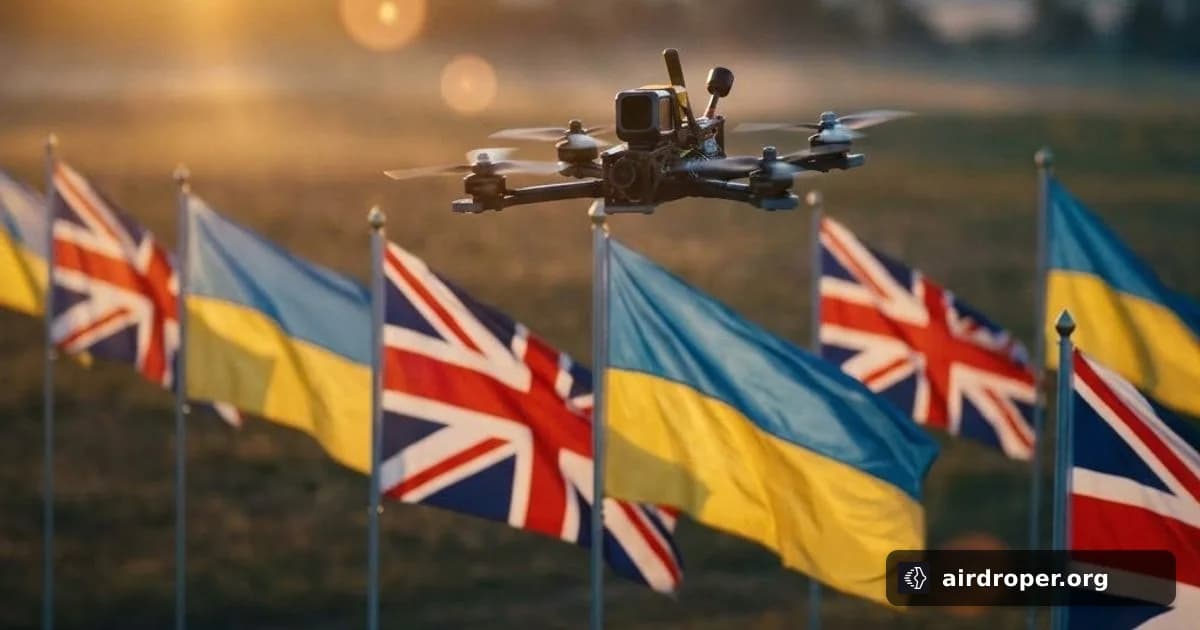
Britain’s Counter-Drone Gap at Home
Why funding alone does not close the gap
Britain’s latest defence spending commitments once again put drone defence in the spotlight. Yet counter-drone security is not solved by budget lines alone. The real challenge is broader: airports, critical infrastructure, dense urban areas, and public events all face a fast-moving threat that can appear and disappear within seconds.
The core issue is that no single system is enough. A radar, a jamming unit, or a camera network can all contribute, but none of them works well in isolation. Effective protection requires layered detection, target identification, and a response process that moves as fast as the threat itself. That is where many countries still find gaps.
Civilian airspace is a different problem
Military environments are often controlled and predictable. Civilian airspace is not. Cities create clutter, radio interference is common, and legitimate drone traffic makes it harder to separate normal activity from hostile intent. A solution designed for the battlefield may perform well under military conditions, but still be unsuitable for a city centre or a sensitive site.
Speed is another weakness. A small drone may only be visible for a brief window. If detection tools are not tied directly to decision-making and response procedures, operators lose precious seconds. In practice, technology alone is not enough; trained staff and clear protocols matter just as much.
What a real counter-drone posture needs
A credible domestic counter-drone setup usually relies on several layers:
- early detection of airborne activity;
- verification that the drone is a genuine threat;
- safe neutralisation with minimal risk to bystanders and infrastructure;
- coordination between security services, police, and site operators.
Without that structure, even large defence budgets may deliver less than expected. Spending is important, but resilience depends on system design, interoperability, and readiness under real-world conditions.
The wider lesson
Britain’s case reflects a wider trend: governments can invest heavily in defence and still remain exposed in the civilian domain. The most effective counter-drone strategy is not just procurement. It is an integrated approach that connects sensors, software, operators, and response procedures into one working system.
Related Posts
Comments
Sign in to leave a comment