
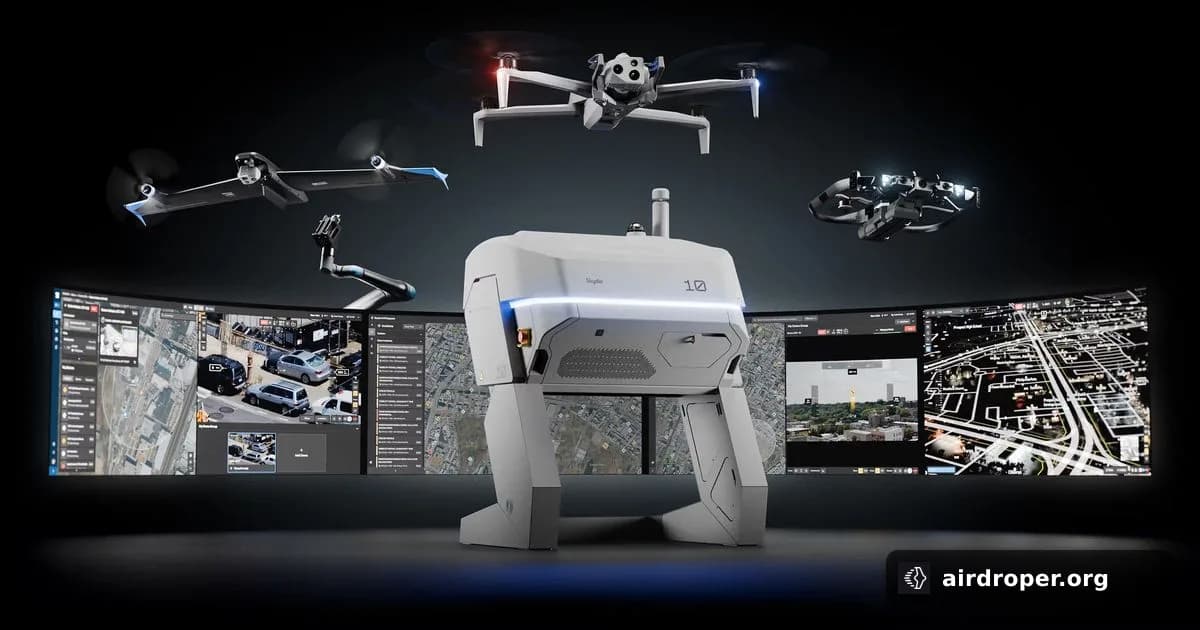
Drone as First Responder: NYPD’s Security Test
When a drone becomes a first responder
New York’s push to secure the 2026 World Cup is a clear sign that drones are no longer viewed only as surveillance add-ons. They are increasingly being positioned as fast-response tools for policing, event security, and situational awareness in dense urban environments. The attraction is straightforward: an aerial system can arrive faster than a patrol car, scan a scene from above, and help operators make quicker decisions.
But the gap between ambition and execution can be wide. A drone catching fire in Brooklyn Bridge Park is a sharp reminder that autonomous security systems must perform under pressure, not just in vendor demonstrations. When a platform is expected to support public safety, any failure becomes more than a technical issue — it becomes an operational and political one.
Why cities are investing in this model
The idea behind drone as first responder is built on practical benefits:
- faster awareness of incidents in crowds;
- better visibility in hard-to-reach areas;
- reduced exposure of officers to immediate risk;
- stronger coordination between aerial and ground teams.
For major events like the World Cup, these advantages are attractive. Large-scale gatherings create exactly the kind of dynamic environment where early detection and rapid assessment matter. That is why police and city agencies are exploring tighter integration between drones, command centers, and response workflows.
Reliability is the real benchmark
High expectations can easily turn into disappointment if reliability is not treated as the core requirement. A security drone is not a consumer device; it is part of an operational system. That means it must be tested, monitored, and supported like critical infrastructure.
The New York case highlights several priorities for any agency or integrator:
- robust pre-deployment testing;
- fallback procedures when autonomy fails;
- strict operational boundaries;
- clear integration between hardware, software, and communications.
Without those layers, a drone may look impressive but remain unsafe to rely on in real-world security scenarios.
The bigger lesson
The future of public safety will likely include more drones, not fewer. The question is not whether cities will use them, but whether they can make them dependable enough for high-stakes environments. The Brooklyn Bridge Park incident shows that the promise of autonomous aerial security is real — but so is the need for engineering discipline, reliable flight control, and systems built for failure-free performance.
Related Posts

Comments
Sign in to leave a comment