
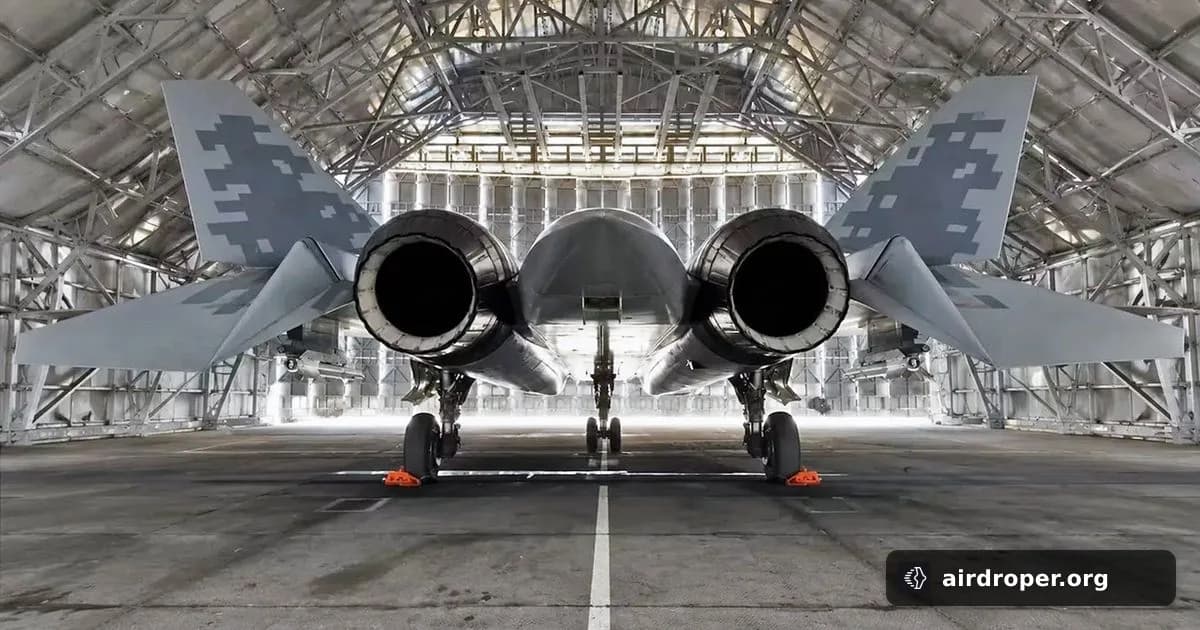
Su-57 May Be Tuned For Drone And Cruise Missile Defense
Su-57 in a New Defensive Role
Russia’s Su-57 is usually discussed as a modern fighter built for air combat and strike missions. But a recent weapons configuration suggests a different emphasis may be emerging: countering drones and cruise missiles. That shift appears tied to the growing pressure created by Ukraine’s long-range strike capabilities.
Why the Configuration Matters
The key point is not that the aircraft has suddenly become a dedicated air-defense platform. Rather, the new loadout points to an attempt to make the fighter more useful against small, hard-to-intercept aerial threats. In this kind of mission, the most important factors are:
- reliable target detection;
- the ability to engage low-altitude, small-profile objects;
- performance in a crowded and contested air-defense environment.
For drone and cruise missile defense, speed alone is not enough. The aircraft also needs effective sensors, data sharing, and suitable weapons for short-notice engagements.
A Sign of Pressure on Air Defense
If the Su-57 is being adapted for this role, it suggests either a gap in other interception assets or an effort to stretch existing air-defense resources. That is not unusual in modern conflict. Multi-role aircraft are often asked to cover missions that would once have been handled by more specialized systems.
Still, there are obvious limits. A fighter jet cannot replace ground-based air defense networks, especially when the challenge is long-duration alert duty, cheap expendable targets, or large-scale saturation attacks. In practice, such aircraft are usually a supplement, not a substitute.
Why It Matters Beyond One Aircraft
This development reflects a broader reality of the current air war: drones and cruise missiles are reshaping how airpower is used and defended against. Even advanced fighters are being pushed toward new tasks as militaries look for faster ways to close gaps in detection and interception.
For the defense industry, the message is clear. The value of a combat aircraft is no longer defined only by speed, stealth, or payload. It also depends on how quickly it can integrate new sensors, networks, and weapons for evolving threats.
The Su-57, in this context, may be less a symbol of traditional air superiority and more a sign of how quickly combat aviation is being forced to adapt.
Related Posts


Comments
Sign in to leave a comment