
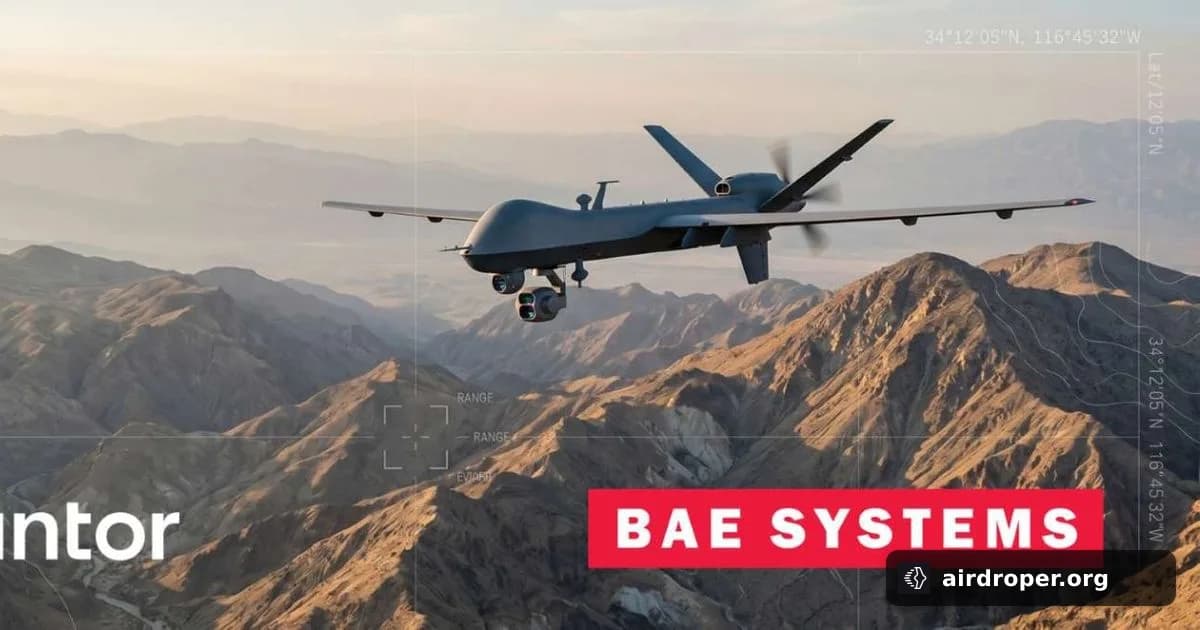
New Drone Targeting Tech Fights GPS Jamming
Clear video is not enough
GPS jamming and spoofing are making drone operations harder in active conflict zones. The problem is deceptively simple: the camera feed can look perfectly usable, yet the coordinates attached to that footage may be wrong. When that happens, precision targeting becomes unreliable.
Defense companies increasingly describe this as targeting paralysis — a condition where operators still have data on screen, but cannot trust it enough to act with confidence.
Why this matters in modern warfare
Drones are no longer challenged only by air defense or communication disruption. Navigation itself has become a contested layer. An opponent does not need to shoot a drone down to reduce its value; it may be enough to interfere with the satellite signal that supports positioning and geotagging.
That creates a serious operational gap. A live image may show a target clearly, but if the location reference is degraded, the operator cannot confirm where that target really is. For strike missions, that uncertainty can stop the mission altogether.
The direction of new targeting tools
Manufacturers and defense teams are now building systems meant to preserve targeting accuracy in heavily jammed environments. The goal is not a single magic fix, but a set of methods that reduce dependence on GPS alone:
- cross-checking position data against other sources;
- navigation approaches that do not rely fully on satellite positioning;
- improved mapping between video and terrain;
- software that flags suspicious navigation anomalies.
Together, these tools aim to keep drones operational even when the electromagnetic environment is hostile.
What this means for UAV systems
As jamming becomes more common, the value of a drone is increasingly measured by resilience, not just flight performance. A platform may fly well and still fail operationally if its coordinates cannot be trusted.
That raises the bar for autopilots, flight controllers, and mission software. The next generation of UAV systems will need to protect not only control links, but also the integrity of navigation data and target localization.
In practice, this is becoming a key divide in the market: systems that can operate through electronic warfare pressure, and systems that cannot.
Related Posts
Comments
Sign in to leave a comment