
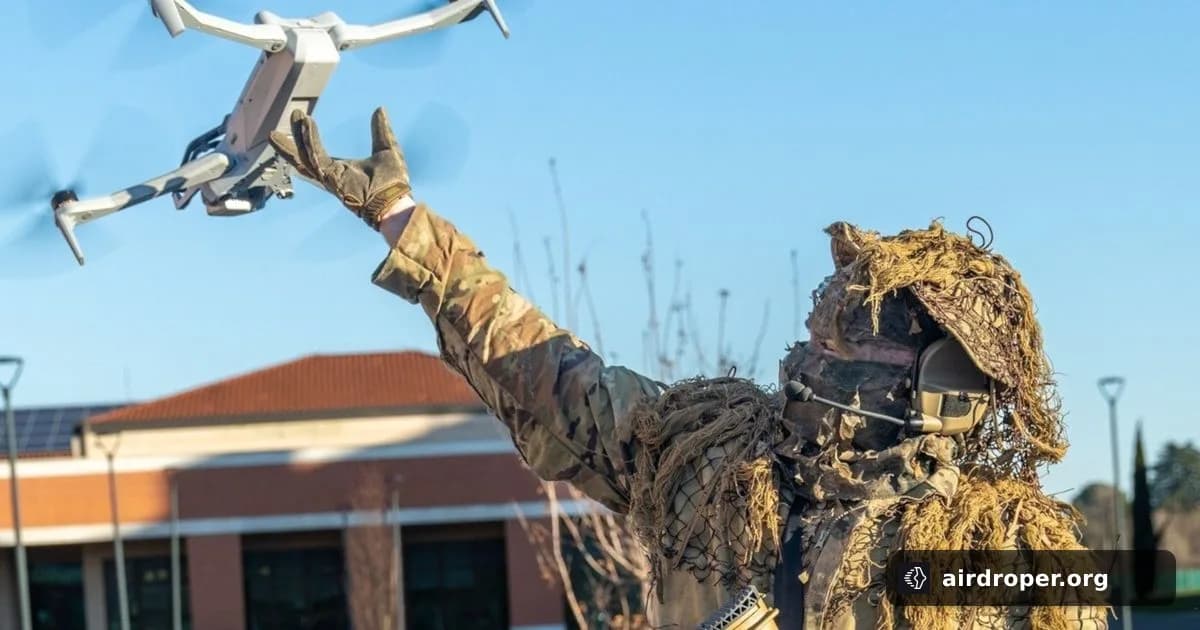
How Drones Expand Army Deception Tactics
Drones as tools of battlefield deception
Uncrewed systems are increasingly being used for more than reconnaissance or strike missions. A new direction in the U.S. Army’s operating concept suggests that deception, concealment, and the creation of false signals may become core tasks for drones in future operations.
Why this matters
Modern combat is not only about detecting the enemy first. It is also about controlling what the enemy thinks it sees. A drone can be used to shape a misleading picture of the battlefield by suggesting:
- a different axis of advance;
- a false location of forces;
- a larger or smaller number of units;
- a different timing for an attack.
That changes the role of drones from passive observers into active participants in operational deception. Instead of simply collecting information, they can help create conditions that force an opponent to react to a threat that is not the main one.
How this shifts drone doctrine
For years, uncrewed platforms were mostly associated with surveillance and, later, with precision strikes. The newer view is broader. Drones can support a layered battlefield approach where maneuver, information advantage, and misdirection are just as important as firepower.
That also means drones cannot be treated as standalone assets. Their effectiveness depends on integration with command decisions, communications, and operational planning. In deception roles, they must behave in a way that is believable to the enemy while remaining tightly controlled by friendly forces.
What this means for UAV development
This trend points to a more demanding future for UAV design and deployment. Systems will increasingly be judged by whether they can support:
- autonomy;
- resilience against electronic warfare;
- swarm coordination;
- deception and decoy-style missions.
For manufacturers and developers, this widens the scope of what a military drone is expected to do. The platform is no longer just a sensor or a weapon carrier. It can also be part of a broader operational deception architecture.
Bottom line
Drones are changing how modern armies think about combat. Their value is expanding beyond scouting and targeting. In this model, uncrewed systems become tools not only for seeing the enemy more clearly, but also for making the enemy see the wrong thing.
Related Posts
Comments
Sign in to leave a comment