Loss of the MQ-4C Triton: What a $240M Drone Crash Means for Maritime Surveillance
US Navy Confirms Loss of MQ-4C Triton Over the Gulf
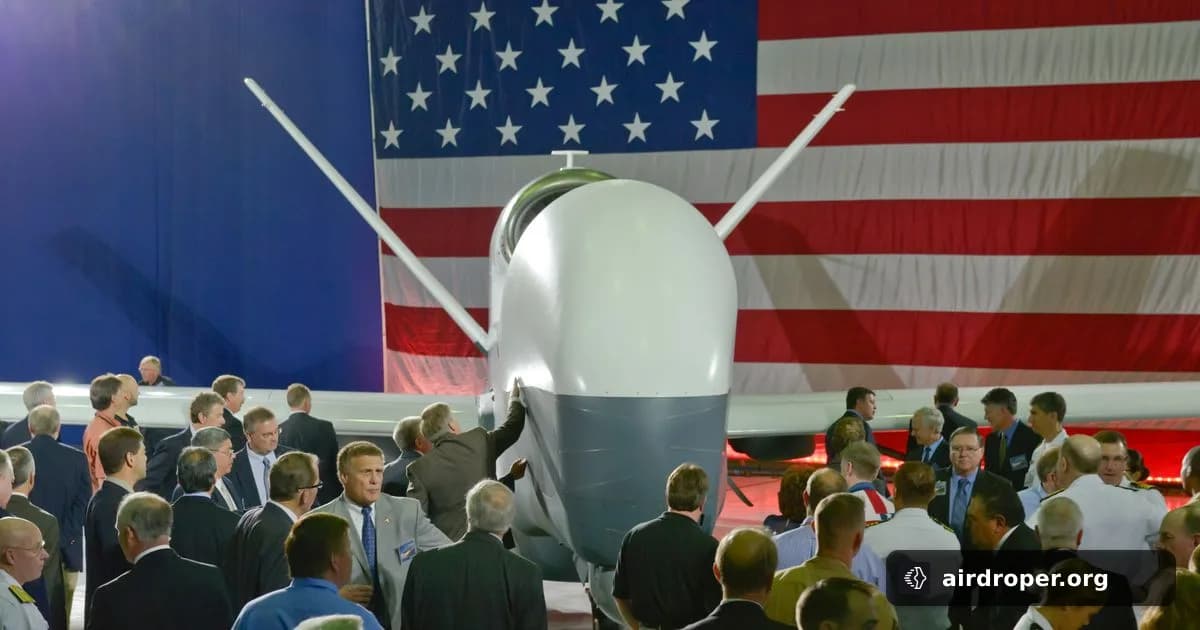
The US Navy has officially acknowledged the loss of an MQ-4C Triton unmanned surveillance aircraft valued at approximately $240 million. The drone went down over the Gulf during a particularly sensitive period — amid a fragile ceasefire tied to Operation Epic Fury.
Beyond the sheer price tag, the incident raises deeper questions about the resilience of maritime surveillance infrastructure and the intelligence risks that follow.
What Is the MQ-4C Triton?
Developed by Northrop Grumman, the MQ-4C Triton is a naval variant of the RQ-4 Global Hawk, purpose-built for persistent maritime patrol. Its core capabilities include:
- Extended endurance — over 24 hours aloft per sortie;
- Real-time intelligence, surveillance, and reconnaissance (ISR);
- Wide-area ocean monitoring across millions of square kilometers;
- Support for fleet operations in regions without continuous manned air coverage.
The platform is a linchpin of US Navy maritime domain awareness, making its loss operationally significant regardless of the circumstances.
The Layers of Risk
A downed Triton during an active ceasefire creates risk on multiple levels:
Surveillance gap. Each Triton covers an enormous patrol area. Even a temporary absence punches a hole in situational awareness that cannot easily be filled by other assets.
Counterintelligence exposure. Wreckage from a sophisticated ISR platform — if recovered by an adversary — could yield valuable insights into sensor technology, communication protocols, or operational patterns.
Strategic signaling. Publicly confirming the loss during a period of regional tension sends messages to multiple audiences, whether intended or not.
The High-Value Platform Dilemma
This incident reignites a persistent debate in defense circles: is concentrating capability in a single, extremely expensive platform the right approach for modern conflict environments?
The case for distributed, lower-cost drone swarms grows stronger with each high-profile loss. Losing one node in a mesh of smaller UAVs is a manageable setback. Losing a $240 million aircraft is an immediate strategic event — in terms of capability, intelligence exposure, and public perception.
Takeaway
The loss of the MQ-4C Triton is a pointed reminder that no platform, however advanced, is immune to the uncertainties of operational deployment. As unmanned systems take on increasingly critical roles in modern conflicts, the questions of redundancy, survivability, and cost-per-capability will only grow more urgent for defense planners worldwide.
Related Posts
Comments
Sign in to leave a comment