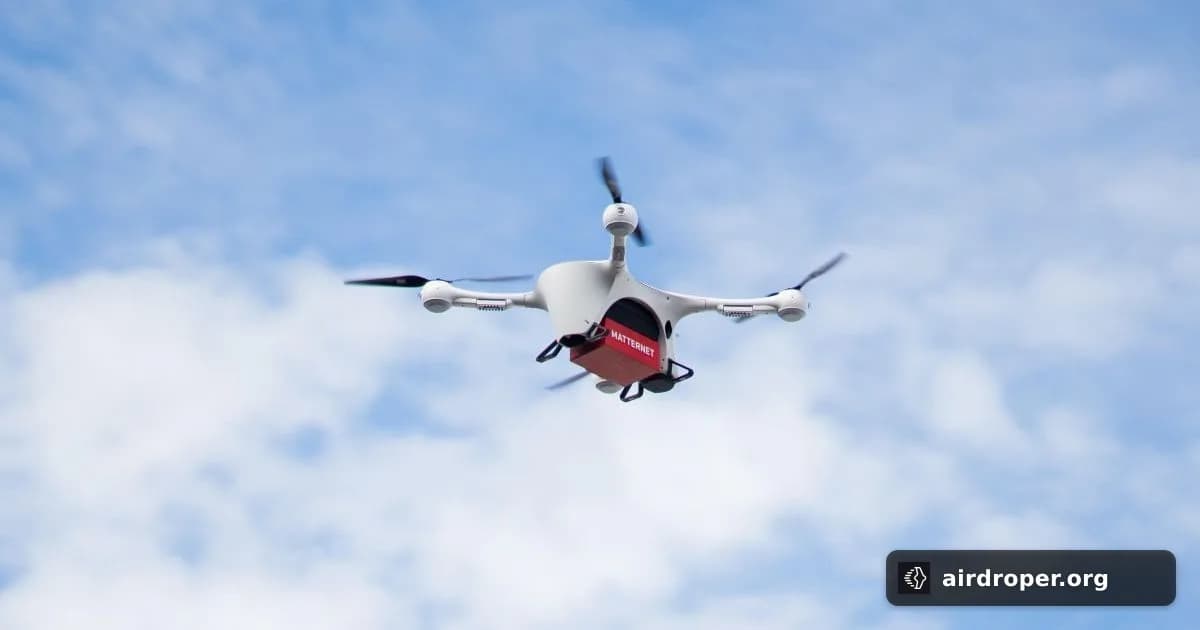
Matternet drones ease London traffic for hospital care
Drone logistics is moving into real healthcare use
In London, drones are increasingly being tested not as a concept, but as a working tool for city logistics. One of the most practical use cases is the transport of medical samples between a hospital and a laboratory, where time can directly affect clinical decisions.
This matters in a city where road transport is often slowed by congestion, construction, and the everyday pressure of urban traffic. For children’s care, that delay can be especially important: faster sample delivery can help clinicians receive results sooner and act without unnecessary waiting.
Why drones fit this task
For medical transport, drones offer several clear advantages:
- more predictable transit times than road vehicles in heavy traffic;
- fast movement of small payloads, such as test samples;
- less dependence on congested ground routes;
- better support for urgent deliveries where minutes matter.
That is why hospital and healthcare teams are paying attention to this type of operation. Drones do not replace existing logistics entirely, but they can handle the critical segment where ground transport is slow, inconsistent, or exposed to traffic delays.
What it means for hospital systems
Medical drone deliveries show how aerial logistics can become part of a real urban workflow rather than a one-off demonstration. For hospitals, that means faster movement of samples and less waiting time for laboratory analysis.
In pediatric care, this has added importance. When clinicians need test results quickly, a more efficient transport link can support faster decisions and smoother coordination between care teams and laboratories.
A city-scale use case with practical value
London is not an easy environment for new transport systems. But it is exactly the kind of place where drones can prove their value: short routes, repeated missions, and time-sensitive cargo.
Healthcare is one of the strongest examples. When the system is reliable, the drone becomes more than an aircraft — it becomes part of the infrastructure that helps hospitals move information faster and reduce delays in care.
Related Posts
Comments
Sign in to leave a comment