
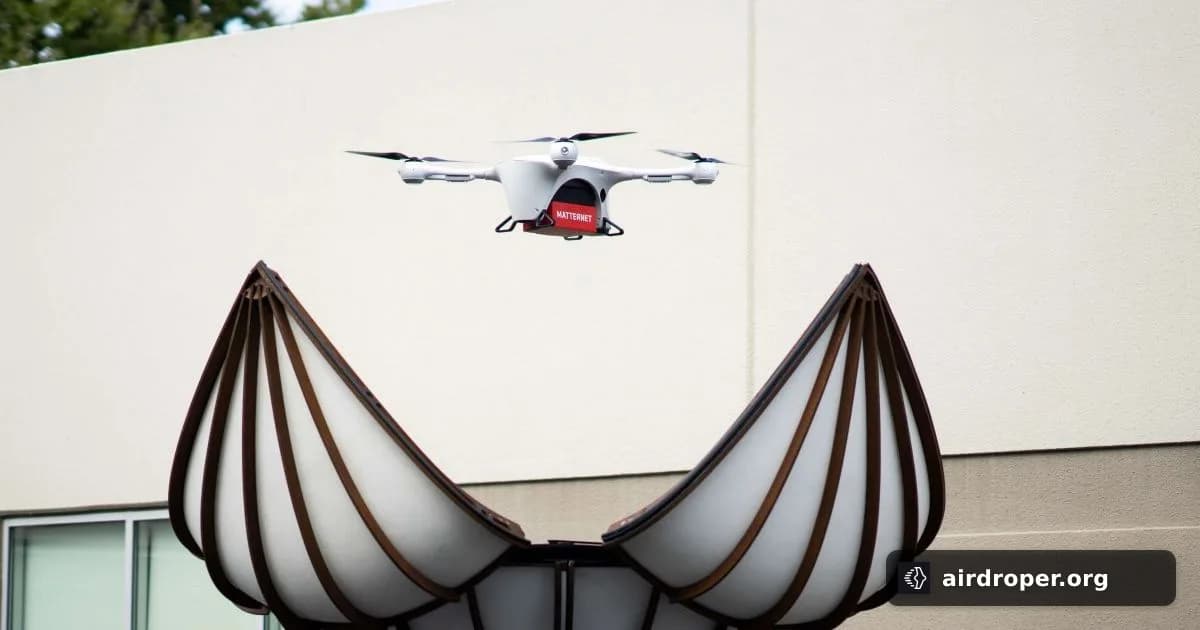
Matternet Drones Connect Central London Hospitals: Medical Logistics Takes Flight
When Every Minute Counts, Drones Deliver
London's streets are legendary for gridlock. For most deliveries, a delay is an inconvenience. But when the cargo is a blood sample, a critical medication, or diagnostic material that needs to reach another hospital fast — traffic becomes a genuine threat to patient outcomes.
That's the problem Matternet's drone delivery network is now solving for the NHS across central London hospitals. The system moves time-sensitive medical cargo through the air, bypassing the city's congested road network entirely.
The Case for Aerial Medical Logistics
Urban medical logistics has always been a challenge. Hospital-to-hospital transfers of lab specimens or pharmaceuticals in dense city centers can be unpredictable by road, particularly during peak hours.
Drones offer a straightforward advantage:
- Fixed flight paths — no traffic lights, no diversions
- Consistent delivery windows — predictable regardless of conditions below
- Sample integrity — faster transit preserves the quality of biological specimens
- Reduced handling — automation limits the risk of human error in transit
Healthcare as a Proving Ground
The healthcare sector is emerging as one of the most demanding — and therefore most valuable — environments for urban drone operations. The requirements are strict: reliability, precision, and regulatory compliance are non-negotiable.
If autonomous drones can meet the standards of NHS logistics, they can meet the standards of almost any urban delivery use case. London is effectively serving as a real-world test bed for what scaled medical drone delivery looks like in a major Western city.
Matternet's Approach
Matternet has built its platform specifically for urban environments — focusing on autonomous operation, integration with air traffic management systems, and the kind of reliability that regulated industries demand. The company's work in London is part of a broader push to normalize drone logistics within complex city airspace.
The Bigger Picture
What's happening in London reflects a wider shift: drone delivery in cities has moved beyond pilots and proof-of-concept projects. Real operations, with real patients depending on the outcome, are now running on drone networks.
As urban air mobility infrastructure matures — better UTM systems, clearer regulatory frameworks, more capable aircraft — expect medical logistics to remain at the forefront. It's a sector where the value proposition is undeniable and the pressure to perform is highest.
Related Posts


Comments
Sign in to leave a comment