Matternet’s M3 drone targets scaling delivery networks
Matternet is focusing on scale, not spectacle
Drone delivery has already proven that short pilot programs are possible. The harder problem is moving from a few successful routes to a network that can handle thousands of deliveries every day. Matternet’s new M3 appears to be built around that challenge.
The company’s direction is clear: reduce dependence on people at every step and lean more heavily on automation. That matters because delivery networks do not scale well when too many tasks still rely on manual handling. Standardized workflows and predictable mission execution become essential once operations grow beyond trials.
What the M3 brings to the table
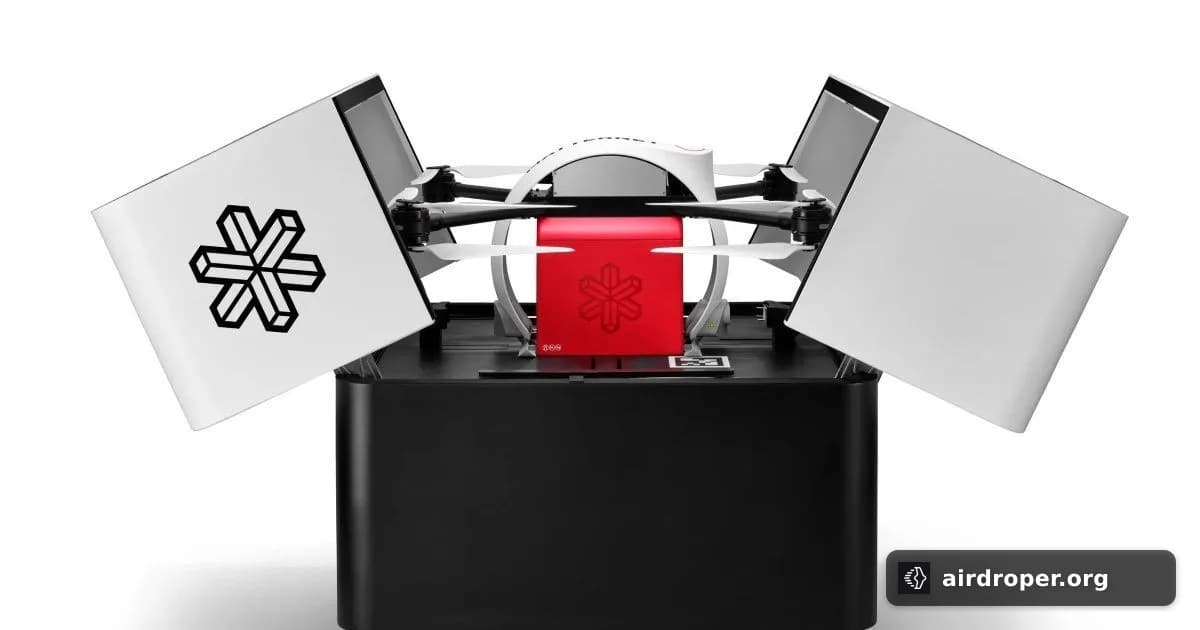
Matternet positions the M3 as a platform for routine commercial delivery. The headline specs are straightforward:
- up to 11 pounds of payload
- up to 10 miles of range
That combination is important for real-world logistics. Payload and range determine whether a drone is useful only in controlled demonstrations or can actually support day-to-day delivery operations.
Why this matters for the industry
The drone delivery sector has moved past the question of whether the technology can fly packages from point A to point B. The real question now is how to scale those missions reliably. That means fewer manual touchpoints, more automation, and a system built around repeatability.
In that sense, the M3 is less about a single aircraft and more about a broader operational model. Companies in this space increasingly need complete delivery ecosystems: launch, flight, handoff, and recovery all built to work together with minimal friction.
The bigger picture
For operators, the practical value of a drone often comes down to integration. A platform that can be folded into an existing delivery workflow is more interesting than one that simply looks impressive on paper. The M3 seems aimed at that reality.
Rather than chasing attention with extreme specifications, Matternet is addressing a more fundamental issue: how to make drone delivery dependable at scale. If the system reduces the need for human involvement, it could help simplify operations and make larger deployment more realistic.
Related Posts
Comments
Sign in to leave a comment