How Mobile Counter-UAS Missions Are Changing
Mobile counter-drone defense is becoming the priority
Modern armies are being forced to deal with aerial threats that appear quickly, move with the battlefield, and vary widely in size and behavior. That is why counter-UAS is shifting away from narrow, single-purpose setups and toward systems that can be deployed fast, adapted easily, and mounted across different types of vehicles and support platforms.
Why platform-agnostic systems matter
The main advantage of a platform-agnostic approach is flexibility. A counter-drone package should not be tied to one vehicle or one mission profile. When the same capability can be moved across platforms, commanders gain more options in how they position forces, respond to emerging threats, and reconfigure equipment as conditions change.
For mobile missions, that flexibility is critical. Units often have limited time to prepare and must be able to shift equipment without lengthy integration work. A system that can be swapped or re-tasked quickly is better suited to fast-changing tactical environments.
The appeal of palletized solutions
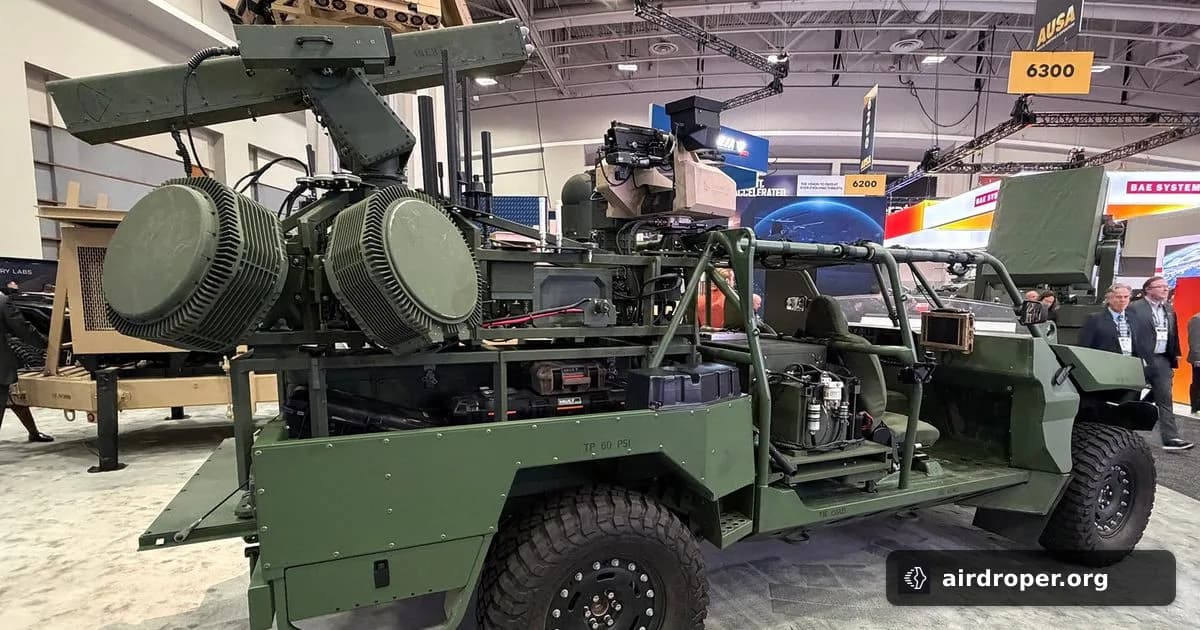
Another trend shaping this mission set is the use of palletized systems. In practical terms, these are modular packages built into a transportable format that simplifies handling and speeds up deployment. Instead of rebuilding a counter-UAS setup for every operation, forces can rely on a standardized kit that is easier to move, store, and activate.
That matters when a unit needs to relocate often or support operations across multiple areas. A palletized configuration can reduce setup time and make the overall system more usable in the field, where speed and portability are often just as important as sensing or engagement performance.
What this means for defense technology
The evolution of counter-UAS missions points to a broader shift in defense procurement: military users are looking for modular, interoperable architectures rather than one-off systems built for a single platform. That includes detection, command-and-control, communications, and the ability to fit into a larger operational network.
For manufacturers, the message is clear. The focus is moving toward adaptability, interoperability, and rapid deployment. As drones become more common on the battlefield, those qualities are increasingly what determine whether a system is useful in real operations.
Related Posts
Comments
Sign in to leave a comment