
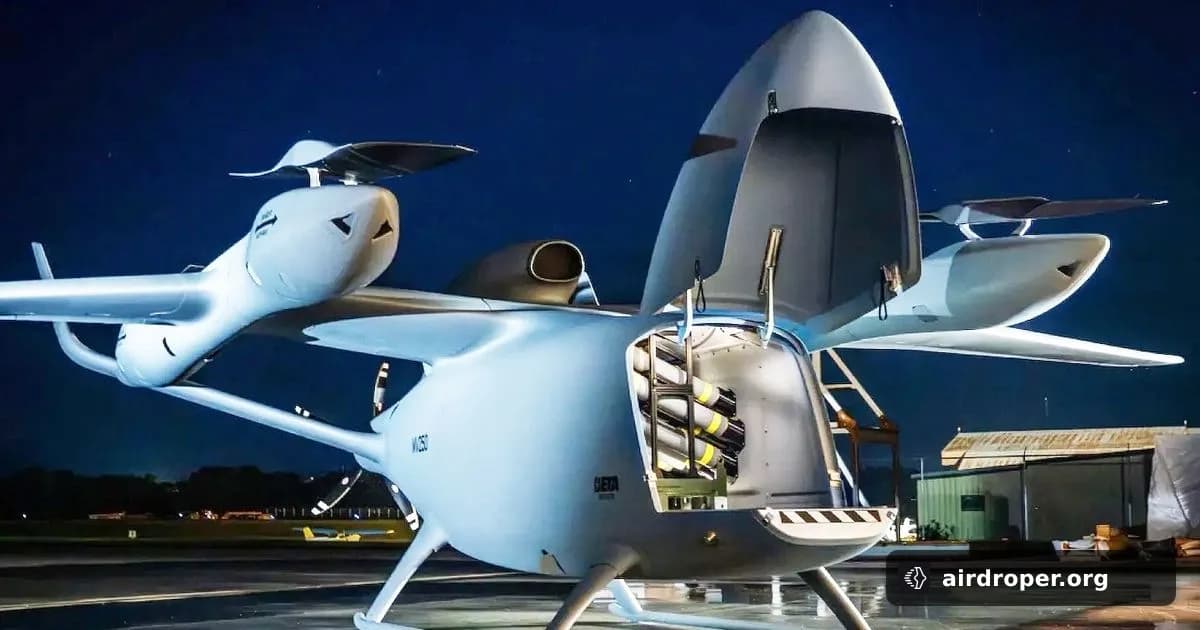
MV250: Hybrid VTOL Drone for Cargo and Missions
A cargo drone built for more than transport
MV250 represents a broader trend in unmanned aviation: platforms are no longer designed only for reconnaissance or surveillance. This hybrid-electric VTOL drone is positioned to move cargo, support dispersed units, and act as part of a larger operational toolkit.
Why hybrid VTOL matters
A hybrid-electric architecture paired with vertical takeoff and landing gives operators flexibility. In environments where runways are unavailable or logistics must move quickly, the ability to launch and recover from compact areas becomes a major advantage.
That makes the concept useful for missions that require:
- transport of supplies into hard-to-reach locations;
- support for widely separated military teams;
- launch of air-launched effects as part of a mission package.
From drone to mission node
The important shift is that cargo drones are becoming operational nodes rather than simple carriers. Instead of moving only goods from point A to point B, they can be integrated into distributed operations where speed, reach, and modularity matter.
Air-launched effects add another layer to that idea. A platform like MV250 can serve as a carrier for additional effects, expanding what one aircraft can do without changing the basic airframe.
The systems that decide performance
For this kind of drone, the real measure of value is not just the frame or propulsion concept. Reliability across the full stack matters: power management, flight control, navigation, and the ability to perform consistently in changing conditions.
That is why hybrid VTOL systems are attracting attention. They combine logistical utility with mission flexibility, and they point toward a future where unmanned aircraft are built to do several jobs at once.
MV250 is another sign that cargo drones are moving toward multi-role use, especially in operations where deployment speed and adaptability are as important as payload capacity.
Related Posts

Comments
Sign in to leave a comment