
Pantsir on Moscow Rooftops: A Shift to Drone Defense
Rooftops as a new layer of air defense
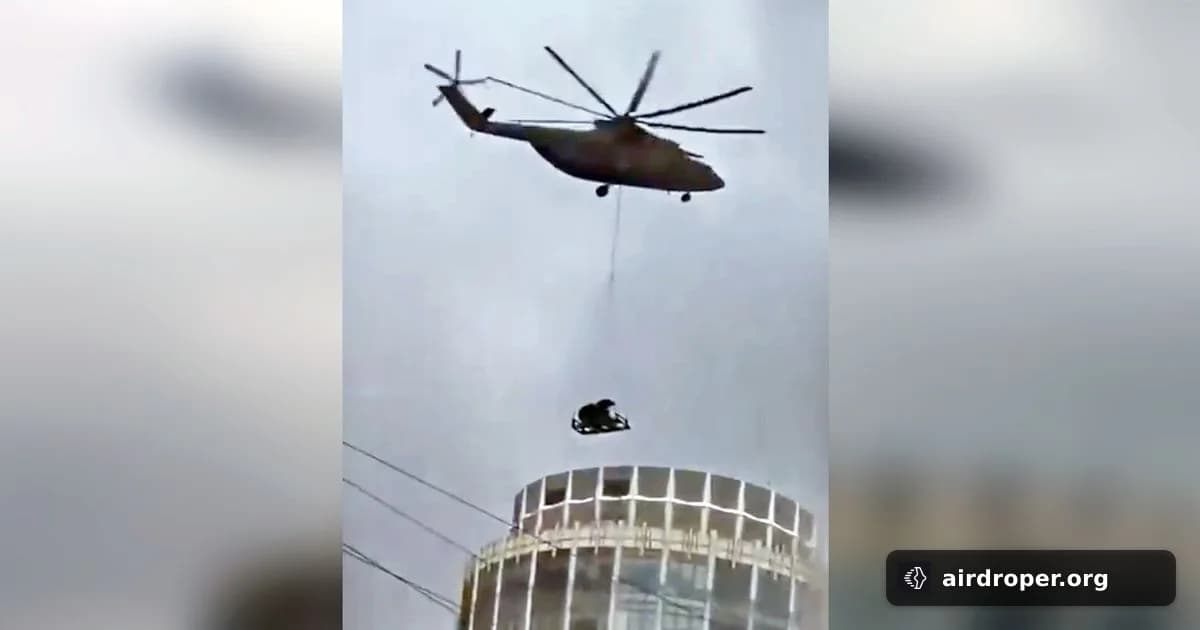
A recent video showing a Pantsir-SMD-E being lifted onto a skyscraper in Moscow highlights a growing trend: air defense is moving closer to the places that are most exposed to drone threats. The deployment reflects Russia’s efforts to strengthen the capital’s protection against increasing Ukrainian drone attacks.
What stands out is not just the system itself, but where it is being placed. Rooftop deployment in a dense city suggests that modern counter-drone defense is no longer limited to fixed sites on the outskirts or broad-area coverage. Instead, it is becoming more localized, built around specific targets and urban terrain.
Why height matters in a drone fight
Putting an air defense system on top of a high-rise can improve its line of sight and place it nearer to the likely flight paths of small aerial threats. In a city packed with buildings, infrastructure, and visual clutter, geometry matters. A higher position can help a system observe low-altitude approaches and react faster to short-notice threats.
At the same time, urban deployment creates its own complications. Crowded airspace, obstacles, and the need to distinguish among many objects make city-based air defense a difficult task. That is why counter-drone systems are increasingly being adapted for fast response and close-in engagement rather than only for traditional air defense roles.
A sign of how drone warfare is changing defense
The appearance of such systems in the center of a major city shows how seriously drone threats are now being treated. Drones are forcing air defense planners to think differently: not only about range and firepower, but also about placement, coverage, and the ability to protect important sites inside dense urban environments.
The Pantsir-SMD-E deployment also points to a broader shift in priorities. Protection is no longer focused solely on military facilities. Administrative buildings, infrastructure, and symbolic targets in the capital are now part of the defense picture.
What the Moscow example tells us
The Moscow rooftop deployment is another reminder that counter-drone defense is becoming more layered and more urban. High-rise buildings, once seen only as civilian structures, can now become part of the defensive network.
As drone threats evolve, so do the systems designed to stop them. The result is a new kind of air defense posture: compact, positioned for speed, and tailored to the realities of city warfare.
Related Posts

Comments
Sign in to leave a comment