
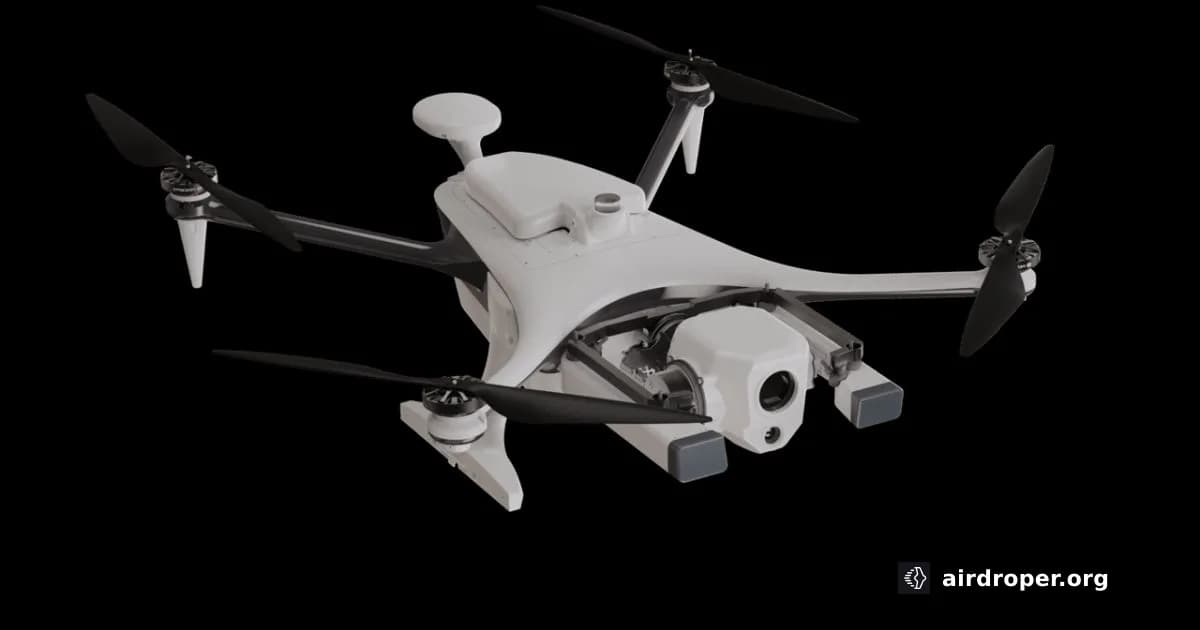
Percepto’s Axion Brings AI to Critical Operations
A software layer for existing drone operations
Percepto has introduced Axion, a platform designed as hardware-agnostic software for mission-critical operations. The core message is straightforward: organizations should be able to add advanced autonomy and analytics without replacing their current drone fleets or industrial sensor networks.
That approach reflects a broader shift in the UAV sector. Value is moving away from standalone aircraft and toward the software that coordinates flights, processes data, and connects aerial systems with day-to-day industrial workflows.
Why hardware-agnostic matters
In practical terms, hardware-agnostic means the platform is built to work across different drone fleets and sensor environments rather than being tied to one proprietary setup. For operators, that can reduce deployment friction and make adoption more realistic in large-scale industrial settings.
The benefits are easy to understand:
- use of existing equipment;
- less vendor lock-in;
- easier expansion across sites;
- faster integration into current operations.
For critical operations, compatibility is often as important as performance. A system that fits into an existing stack can be deployed faster and with fewer organizational hurdles.
Physical AI moves from concept to operations
Percepto links Axion to the idea of physical AI — AI that does not just analyze data, but supports decisions and actions in the physical world. In UAV operations, that can translate into better mission orchestration, real-time awareness, and more efficient use of aerial assets in industrial environments.
This is especially relevant in sectors where inspections, security patrols, and site monitoring must be continuous, precise, and safe. In those cases, the software layer becomes the control center, while drones and sensors act as connected tools inside a larger system.
What this signals for the market
Axion points to a market that is increasingly platform-driven. Instead of asking only which drone to buy, operators are asking how to build an operational stack that can scale across sites, data sources, and mission types.
That change has implications for energy, infrastructure monitoring, perimeter security, and other industrial use cases where automation is becoming a standard requirement rather than a bonus feature.
The bigger takeaway is clear: the next stage of UAV adoption will be shaped by interoperability, software flexibility, and the ability to turn existing hardware into part of a smarter operational system.
Related Posts


Comments
Sign in to leave a comment