
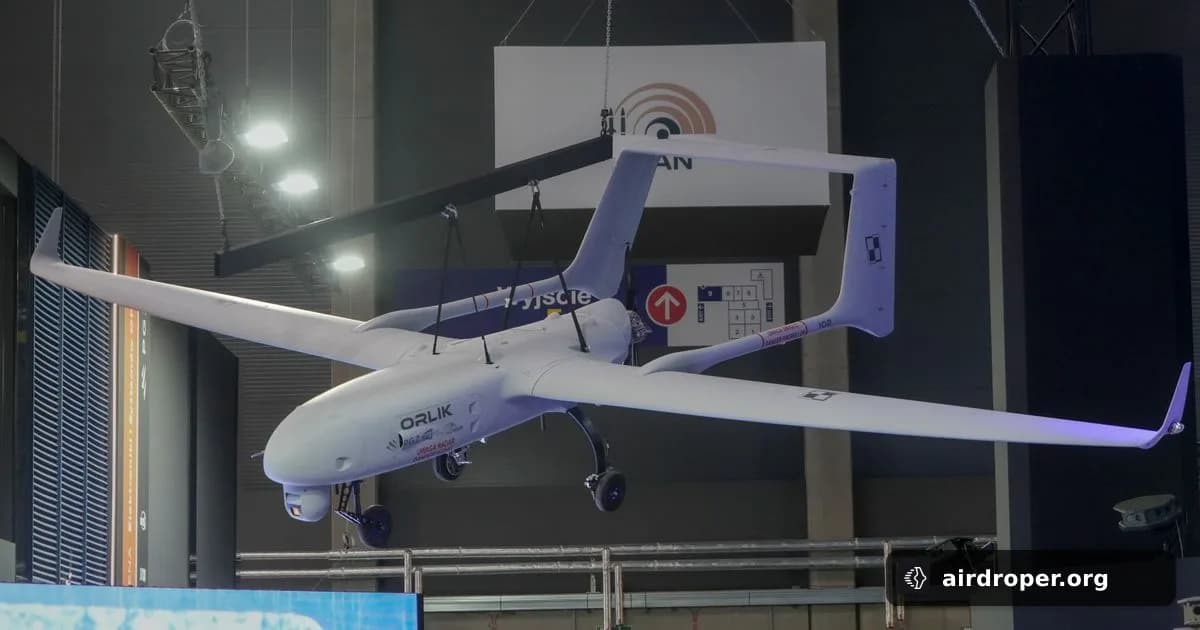
Phase III Drone Dominance: Technical Framework
Phase III and the shift in drone design priorities
The Phase III Request for Solutions points to a broader change in how UAVs are being specified and built. The focus is no longer limited to flight performance alone. Instead, the framework brings together platform architecture, mission requirements, and payload integration for two very different operational profiles: deep strike and close-quarters battle (CQB).
That distinction matters. A drone optimized for long-range missions is not automatically suitable for short-range operations in congested terrain, just as a compact maneuverable platform may not meet the endurance and resilience needed for deeper missions. Phase III makes clear that modern UAV development is becoming more mission-specific and more system-oriented.
Architecture must match the mission
The main technical lesson is straightforward: the airframe is only one part of the equation. Endurance, navigation stability, control reliability, communications robustness, and payload handling all shape whether a platform is actually useful in the field.
For deep strike profiles, designers must prioritize range, energy efficiency, guidance stability, and performance in contested environments. For CQB, the emphasis shifts toward agility, fast response, precision, and reliable control in constrained spaces.
This is why modular architecture is increasingly important. A platform built around adaptable subsystems can be adjusted for a specific mission without redesigning the entire system. That includes the flight controller, software logic, sensor interfaces, and the way mission components interact under stress.
Integration is the real challenge
The phrase lethality integration does not simply refer to adding a payload. It implies a coordinated system where the aircraft, navigation stack, communications link, control logic, and mission execution all work together. If one element is weak, the whole platform becomes less effective.
For developers, that creates a clear list of priorities:
- stable performance under electronic interference;
- predictable control during rapid maneuvers;
- flexible sensor and payload integration;
- low latency in the control loop;
- resilience in critical modules.
Why this matters for the UAV sector
Phase III reflects a move away from isolated prototypes and toward structured system design. The industry is increasingly valuing platforms that can be configured quickly for a specific mission while still maintaining control quality and operational reliability.
For engineering teams, that raises demand for dependable electronics, capable autopilots, and clean subsystem integration. For operators, it means systems that must perform not only in ideal conditions, but also in environments where failure is expensive and time is limited.
Related Posts
Comments
Sign in to leave a comment