
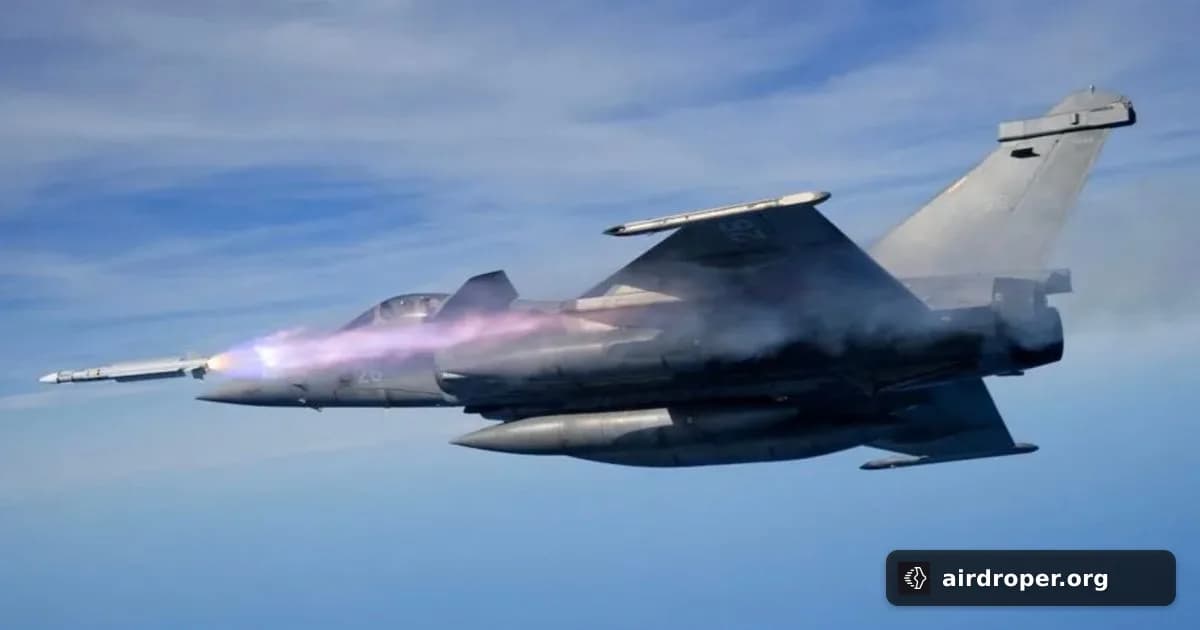
Rafale Destroys Drone Over the Baltic: Why It Matters
A Small Drone, a Big Signal
Footage of a Rafale fighter taking down a drone over the Baltic region matters for more than the immediate interception itself. If this really is the first publicly captured engagement of this type in Europe, it highlights how quickly drones have become part of the air-policing problem NATO now faces.
The incident fits a broader pattern seen across modern air defense: small, relatively inexpensive unmanned aircraft can force a response from high-end combat jets. That changes the calculation for commanders, because the challenge is no longer only about speed or range. It is also about how to respond in a way that is sustainable, precise, and proportionate.
Why the Baltic is a sensitive zone
The Baltic airspace has long been one of Europe’s most closely watched regions. Patrol aircraft operate there under tight timelines and with limited margin for error. In such an environment, a drone can be more than a stray object. It can serve as a surveillance tool, a probe of response times, or simply a reminder that the air picture is becoming more complex.
What stands out in this case is that air-policing missions are no longer centered only on traditional manned aircraft. Small drones are now part of the threat set, and they are harder to spot, classify, and deal with quickly.
What this means for NATO
The rise of drones in contested airspace pushes NATO toward adaptation in several areas:
- Detection: sensors must perform better against low-signature targets;
- Identification: crews need faster ways to judge intent and threat level;
- Interception: the chosen response has to balance effectiveness, safety, and cost.
This is why drone defense is becoming a layered problem. Fighters remain a critical tool, especially when immediate action is required. But they are only one part of a wider counter-UAS picture that includes better surveillance, command-and-control, and dedicated anti-drone systems.
Bottom line
A video of a fighter shooting down a drone may look like a single tactical event, but it carries a broader message. Drones are no longer a secondary nuisance in European skies. They are now a real operational factor — one that is reshaping how air policing and air defense must evolve.
Related Posts
Comments
Sign in to leave a comment