
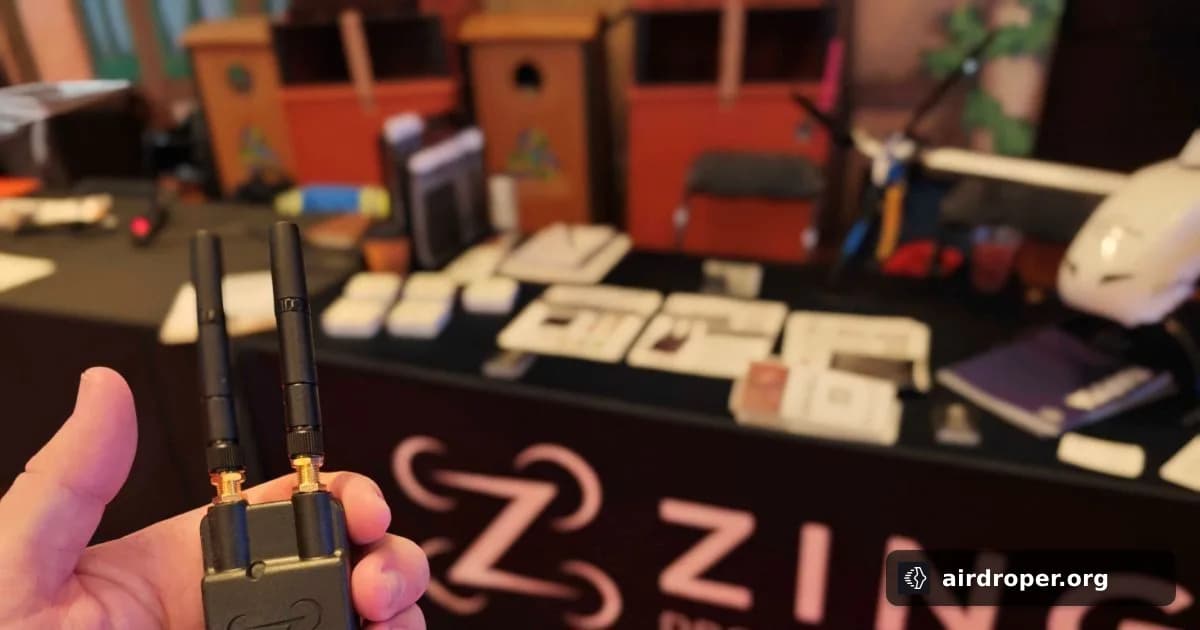
Smaller Secure Hardware for Drone Remote ID
Remote ID is pushing the market toward smaller hardware
Remote ID requirements are steadily reshaping drone electronics. For manufacturers and operators, the challenge is no longer just compliance. They need modules that are easy to integrate, do not add unnecessary complexity, and still support reliable in-flight identification.
Against that backdrop, Zing Drone Solutions and South Korea-based NUCODE have signed a memorandum of understanding and reached a preliminary agreement to explore the development and supply of compact wireless modules for drone identification systems.
What the partnership is looking at
The collaboration centers on small hardware modules that could become part of a drone’s identification setup. That matters for several reasons:
- smaller form factors make integration easier across different drone types;
- hardware-based approaches can fit production workflows more naturally;
- security is a key concern when identification data is being transmitted;
- Remote ID compatibility is increasingly becoming a baseline requirement.
This kind of move shows how the industry is shifting from discussing Remote ID in general terms to solving the engineering details. For manufacturers, the important variables are now size, power draw, reliability, and how easily the module can be installed.
Why it matters for drone makers
Remote ID is affecting more than software. It is influencing platform architecture. If an identification module can be made smaller and more secure, it becomes much easier to add it to lightweight commercial or specialized drones.
That is an important signal for the sector: communications, telemetry, and control systems need to be designed with regulatory requirements in mind from the start. Otherwise, Remote ID retrofits can add weight, complicate assembly, or force redesigns of the electronics stack.
The industry is balancing compliance and integration
Partnerships like this do not produce immediate market changes, but they do point to where the industry is heading: toward smaller, more secure, and more standardized modules. In drones, that matters because every added component must respect weight, power, and operational simplicity.
Remote ID is no longer just a standalone feature. It is becoming part of the core infrastructure of modern UAV platforms. As a result, demand for compact identification hardware is likely to keep growing.
Related Posts
Comments
Sign in to leave a comment