
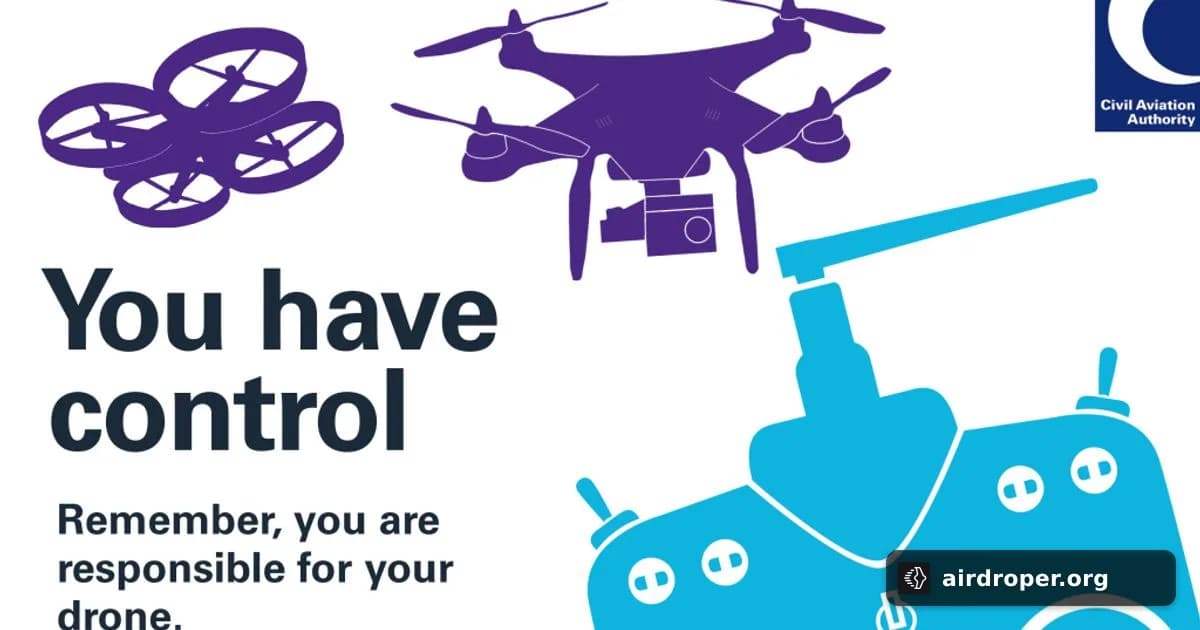
UK Sets Course for eVTOL Commercial Operations by 2028
UK CAA Lays Regulatory Groundwork for eVTOL Operations
The UK Civil Aviation Authority has published CAP3240, a dedicated regulatory framework designed to enable commercial piloted electric vertical take-off and landing (eVTOL) flights by 2028. It is one of the most concrete regulatory commitments to advanced air mobility made by a major aviation authority to date.
Why Existing Rules Don't Fit
Decades of aviation regulation were built around fixed-wing aircraft and traditional helicopters. eVTOL aircraft don't fit neatly into either category — they use distributed electric propulsion, generate lift in fundamentally different ways, and often transition between vertical and winged flight modes mid-journey.
Rather than drafting entirely new standards, the CAA chose to adapt existing frameworks to cover two emerging aircraft categories:
- Powered-lift — vehicles that take off vertically but cruise in a fixed-wing mode;
- Non-conventional helicopters — rotorcraft with unconventional rotor configurations.
This approach is pragmatic: it accelerates the certification process while maintaining established safety principles.
What CAP3240 Actually Covers
Pilot licensing. The framework introduces new licensing pathways tailored to eVTOL operations. A key focus is energy management training — electric powertrains fail differently than turbine engines, and pilots need specific competencies to handle those scenarios.
Energy management requirements. For battery-powered aircraft, state of charge is the equivalent of fuel reserves. CAP3240 sets out how operators must monitor and plan for energy margins throughout a flight.
Aerodrome sharing. Most eVTOL operators will rely on existing heliports and small aerodromes. The framework defines how these facilities can accommodate new aircraft types alongside conventional rotorcraft.
The Broader Significance
The UK is positioning itself as an early mover in eVTOL regulation. A clear, published timeline — commercial operations by 2028 — gives manufacturers, investors, and prospective operators something concrete to plan around.
The implications extend beyond piloted air taxis. The regulatory logic being developed for eVTOL will inevitably shape how autonomous cargo drones and urban air mobility systems are certified in the years ahead. When the regulatory environment becomes predictable, the entire supply chain — hardware developers, software teams, and operators alike — gains the confidence to commit to long-term product roadmaps.
For a sector that has often moved faster than its rulebook, a structured certification pathway is arguably as important as any technical breakthrough.
Related Posts

Comments
Sign in to leave a comment