
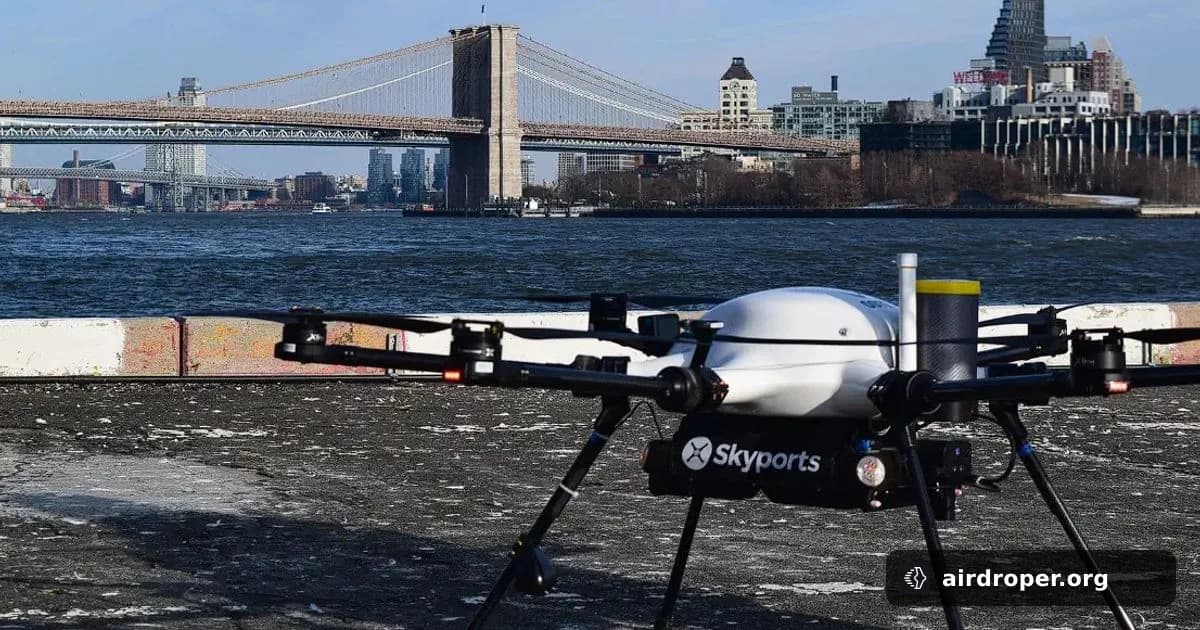
Over the East River: How Drones Could Transform Urban Logistics
A New Chapter for Urban Air Mobility
The Port Authority of New York and New Jersey, in partnership with Skyports Drone Services, has kicked off a 12-month drone cargo trial that could set a precedent for urban logistics worldwide. The operation runs between Lower Manhattan and the Brooklyn Marine Terminal — entirely over the East River.
The project carries full FAA approval, a critical milestone for any commercial drone operation in U.S. airspace.
Why Fly Over Water?
Routing flights exclusively over the river is a deliberate strategy. It allows operators to:
- reduce risk to people and ground traffic;
- navigate regulatory hurdles more easily than over populated urban areas;
- relieve street-level congestion, a persistent challenge in dense cities.
This positions the trial firmly in the "middle-mile" logistics space — moving goods efficiently between major distribution hubs rather than handling last-mile consumer delivery.
Medical Supplies First
Among the priority cargo types are medical supplies and equipment. This focus makes practical sense: healthcare logistics demands speed and reliability that urban road networks often cannot guarantee. Drone delivery sidesteps traffic entirely, making time-sensitive medical shipments more predictable.
The use of drones for medical cargo is already gaining traction in various parts of the world, and this trial adds a major metropolitan proof-of-concept to the growing list.
An Environmental Argument
The trial also frames itself as a sustainability initiative. Urban freight transport is a significant contributor to city air pollution. Shifting even a fraction of cargo movement to electric drone platforms could meaningfully reduce emissions — a consideration that resonates with city planners and regulators alike.
Broader Implications
Launching a drone logistics corridor in one of the world's most complex urban environments sends a clear message: the technology is mature enough to be tested at scale, in real conditions, under regulatory oversight.
If the 12-month evaluation demonstrates consistent safety and operational efficiency, it could serve as a replicable blueprint for other cities looking to modernize freight infrastructure. For the broader drone industry — from airframe manufacturers to avionics developers — this kind of high-profile trial validates continued investment in certified, commercially viable UAV platforms.
Related Posts

Comments
Sign in to leave a comment