
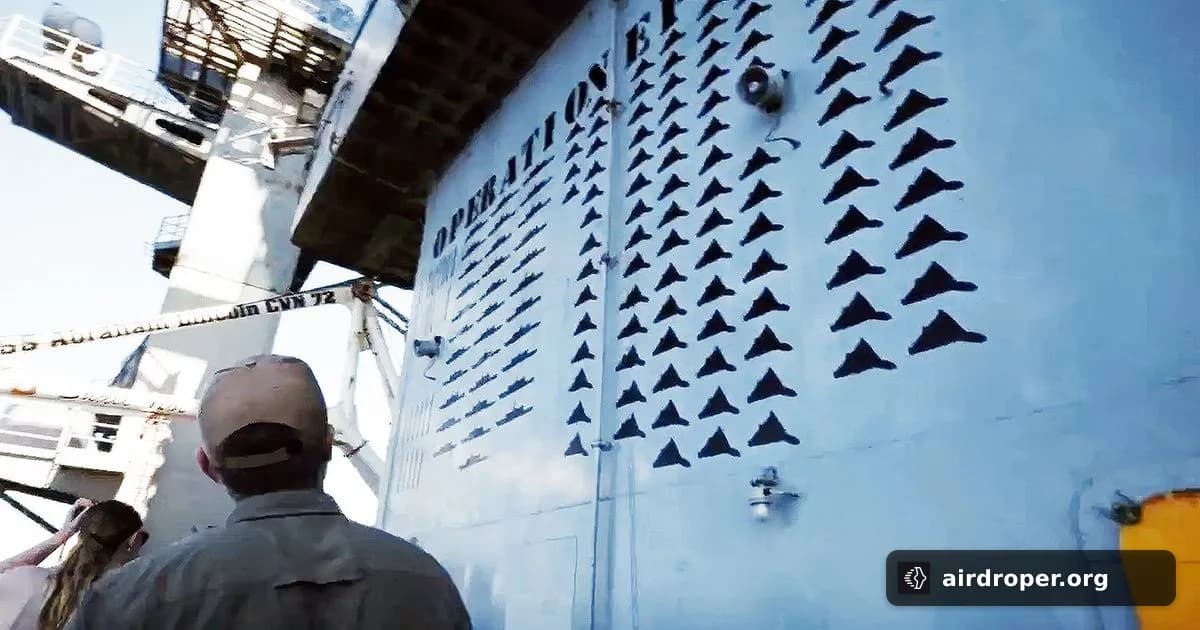
USS Abraham Lincoln Returns With Kill Marks On Its Island
A ship that comes back with a record
When USS Abraham Lincoln returned from deployment, one detail drew immediate attention: its island superstructure carried kill marks. In naval practice, those markings are more than surface decoration. They visually record combat activity and signal that the ship and its carrier strike group were directly involved in a real operational fight.
In this case, the marks point to the Lincoln Carrier Strike Group’s role in the confrontation with Iran. That makes the ship’s return notable not only as a routine homecoming, but also as a public reminder of how carrier groups are used in modern maritime conflict.
Why kill marks matter
Kill marks have long been part of military visual culture. On ships, aircraft, and other platforms, they can represent confirmed engagements or successful defensive actions, depending on the unit’s conventions. On a carrier, they serve as a compact way to communicate experience, mission history, and operational intensity.
For Abraham Lincoln, the markings also reflect a broader reality: naval warfare now includes drones as a routine threat. Carrier groups are no longer focused only on classic ship-to-ship scenarios. They must respond to unmanned systems, missiles, and other fast-moving hazards in crowded operational theaters.
What the markings tell us about today’s sea fight
The appearance of drone- and ship-related marks on the island structure highlights how much maritime operations have changed. A modern carrier strike group has to defend itself while projecting power over long distances, often in contested air and sea space. That means interception, surveillance, electronic awareness, and rapid response are all part of the same mission set.
From an analytical perspective, these marks are a visible clue that the Lincoln group operated under real pressure, not in a training environment. They also underline how unmanned systems have become embedded in naval combat. Drones are no longer an edge case; they are part of the main threat picture.
A symbol with operational meaning
To outside observers, the markings may look like a ceremonial detail. In practice, they are a shorthand for a much larger story: deployment, engagement, adaptation, and return. They mark the point where a ship’s operational history becomes visible from the pier.
That is why the Abraham Lincoln story resonates beyond the US Navy. It shows how modern fleets now measure success not only in presence or deterrence, but also in surviving and responding to drone-era combat.
Related Posts


Comments
Sign in to leave a comment