
AARTOSTM Hawk T1: Airborne RF Geolocation
Taking RF detection above the battlefield
Low-altitude drone swarms remain one of the hardest threats to detect and track. When a group of UAVs uses terrain, buildings, or other cover, ground-based systems can lose valuable time trying to identify where the signal is coming from and where it is moving next. That is why airborne sensing is drawing more attention in counter-UAS planning.
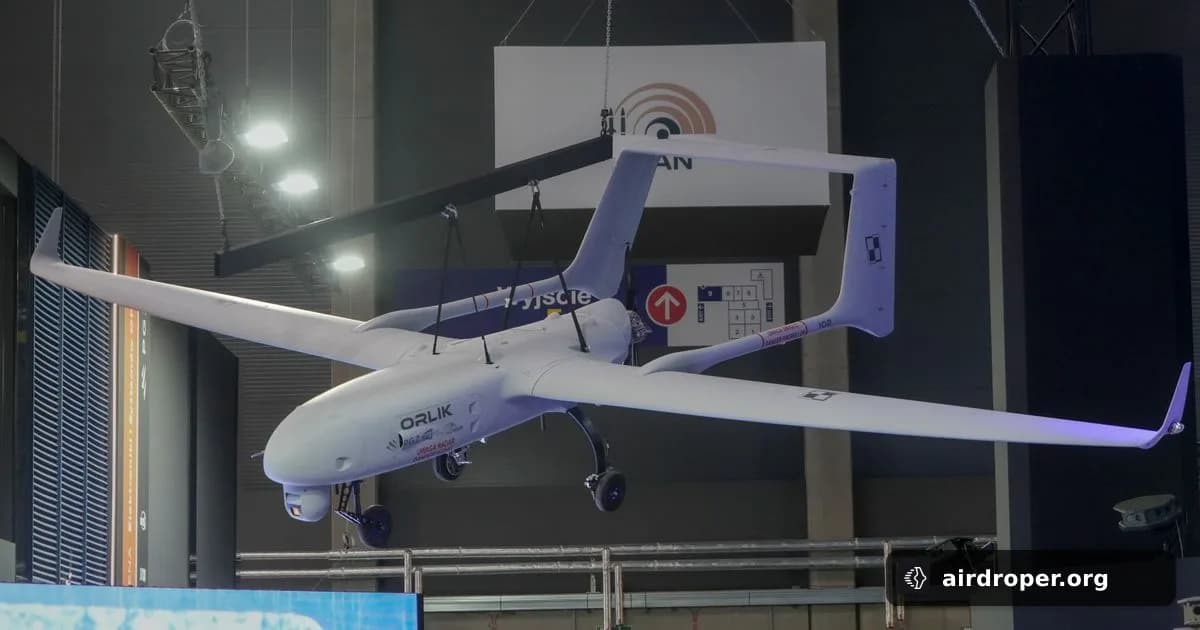
The AARTOSTM Hawk T1 follows that logic. It is an airborne RF geolocation system designed for counter-UAS and electronic warfare operations. Instead of relying only on perimeter sensors, the concept places signal detection higher, where the radio environment can be observed from a better angle and with fewer obstructions.
Why altitude changes the equation
Countering drones is no longer just a matter of spotting a target near a protected site. UAVs can fly low, split into groups, and exploit terrain or urban cover to delay detection. In that environment, a ground-only RF picture may not be enough for a fast response.
An airborne platform can help:
- widen the view of the RF spectrum over difficult terrain;
- improve detection of low-altitude activity;
- support direction finding of emitting sources;
- add another layer to air defense and EW workflows.
For operators, this is not only about finding a signal sooner. It is also about building a clearer operational picture when the threat is moving quickly and trying to stay hidden.
RF geolocation in EW missions
RF geolocation matters when the goal is not just to detect activity, but to pinpoint it through radio emissions. That makes it especially useful in electronic warfare scenarios, where signals may be brief, mobile, or masked by the environment.
Hawk T1 reflects a broader shift in the market: sensing tools are becoming more mobile, more elevated, and more focused on radio intelligence. For defense teams, that means more flexibility against threats that are increasingly coordinated, low-profile, and difficult to engage with static systems alone.
What this trend suggests
As drone threats become more complex, demand grows for sensor platforms that move detection beyond the ground plane. Airborne RF geolocation will not replace radar, jamming, or other layers of protection, but it can strengthen them where low altitude and terrain are helping the attacker.
Related Posts

Comments
Sign in to leave a comment