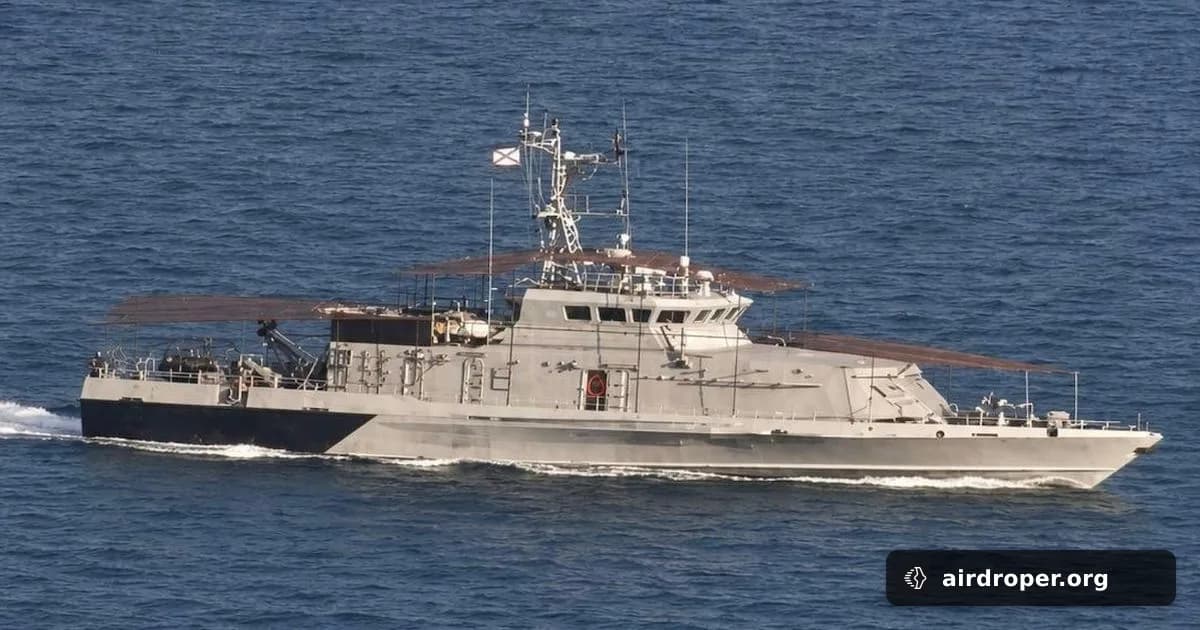
Russian Patrol Boat Seen With Anti-Drone Cage
A quick fix for a growing naval drone threat
A Russian patrol boat has been spotted with an improvised overhead metal frame, the kind of setup often referred to as a “cope cage.” The addition highlights how naval platforms are being forced to adapt to drone attacks from the air.
This type of protection is familiar from ground warfare, where crews have used cages and screens to reduce the risk of top-attack strikes. Seeing the same concept on a boat suggests that the threat has now clearly moved into the maritime domain as well.
Why these screens are showing up
Ukrainian drone strikes against naval targets have pushed the other side to look for defenses that are fast, cheap, and easy to bolt on. For a patrol boat, that logic is obvious: there is limited room for major redesign, and many critical areas remain exposed on top.
But an overhead screen is only a partial answer. Drones do not have to come in straight from above, and they can exploit different angles or target vulnerable spots that a simple frame does not cover. That makes these structures look more like an emergency workaround than a durable solution.
What it says about modern naval warfare
The appearance of a cope cage on a patrol boat is more than a visual curiosity. It reflects how quickly naval survivability requirements are changing under pressure from unmanned systems.
Ships and small combat craft now have to consider threats that were once associated mainly with armored vehicles on land. That means protection cannot rely on a single improvised layer. Better detection, electronic countermeasures, close-in defenses, and smarter layout of critical systems all matter more than a steel cage alone.
For now, these overhead frames remain a fast response to a new problem. But as drone tactics continue to evolve at sea, it is becoming harder to argue that simple roof-style protection is enough.
Related Posts
Comments
Sign in to leave a comment