HYFIX H1P: Navigation Module for Small UAVs
HYFIX makes H1P available for small UAV programs
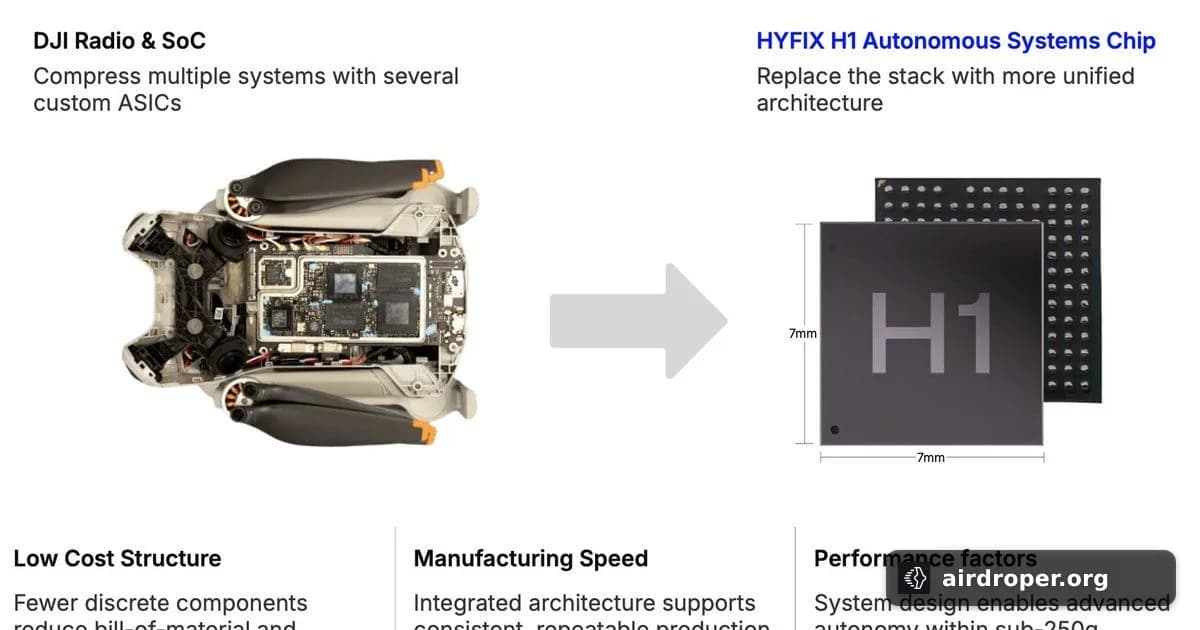
HYFIX Spatial Intelligence has announced the immediate availability of samples and evaluation kits for H1P, a positioning, navigation, and open-compute module aimed at small unmanned systems. The move puts another compact building block on the table for developers who need navigation hardware that also brings onboard processing into the same package.
Why this matters for compact airframes
Small UAVs tend to live under the same constraints: limited payload, tight power budgets, and the need for reliable positioning in a lightweight form factor. A module that combines navigation with compute can reduce integration complexity and help designers keep the architecture cleaner.
That matters because many small platforms are not just flying sensors anymore. They often need enough onboard processing to support custom workflows, data handling, or mission logic without adding separate modules that increase weight and wiring complexity.
Evaluation kits are the real signal
The release of samples and evaluation kits is often more important than the announcement itself. It means engineering teams can begin testing the module in real setups rather than treating it as a paper product. For integrators, that usually translates into faster answers on questions such as:
- how the module fits into the existing avionics stack;
- whether the power and size profile matches the platform;
- how well it supports development and prototyping;
- whether the compute side is flexible enough for the intended use case.
In practice, this is where products either become part of a flight-ready system or remain interesting only for limited lab work.
A broader trend: navigation plus compute
The H1P launch reflects a wider direction in the small UAV sector. Instead of treating navigation and processing as separate blocks, manufacturers are increasingly pushing toward integrated modules that can do both. That approach can simplify design, reduce component count, and make system-level optimization easier.
For developers building small unmanned systems, this kind of hardware is attractive not because it promises to replace the whole flight stack, but because it helps reduce friction at the integration stage. And in UAV development, integration friction is often the difference between a fast prototype and a delayed program.
Related Posts
Comments
Sign in to leave a comment