
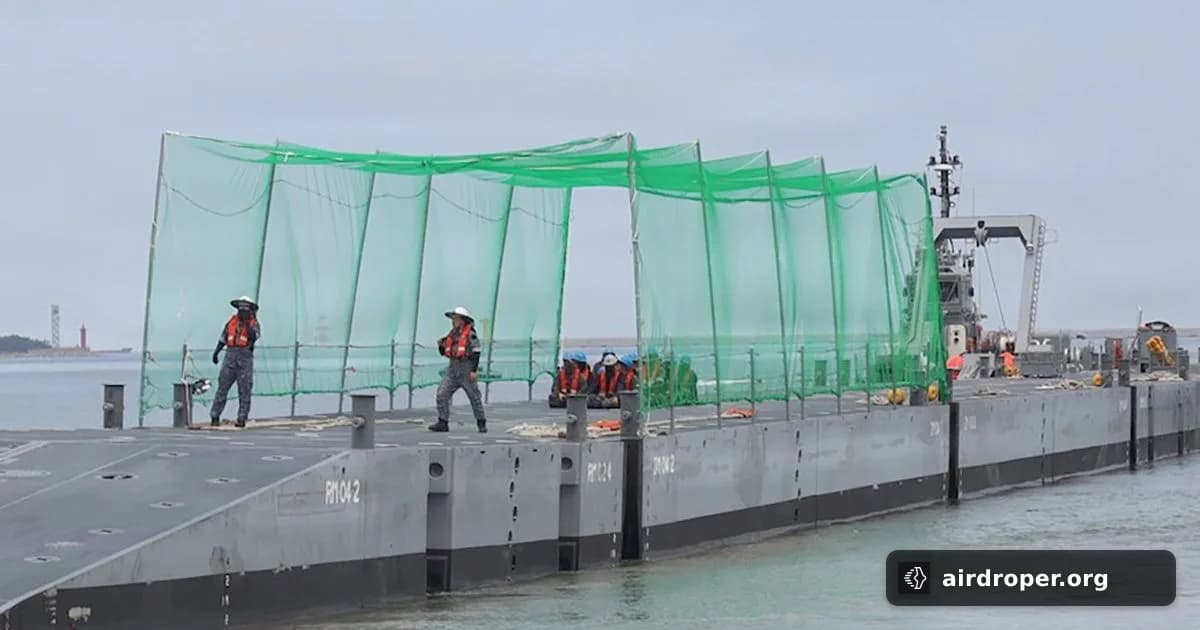
Anti-Drone Netting Enters Logistics Training
A simple barrier for a complex threat
During a recent logistics exercise, the U.S. Marine Corps reportedly used anti-drone netting to protect equipment and key support areas. The idea is straightforward, but it reflects a broader shift in modern defense: more militaries are looking for low-cost, fast-deploying ways to counter small drones.
Why netting is gaining attention
Small drones have become a persistent problem on the battlefield and around rear-area sites. They are cheap, mobile, and useful for reconnaissance or attacks against exposed assets such as storage areas and transport hubs. In response, military units are testing a wide range of countermeasures, and netting is increasingly part of that mix.
Its appeal is practical. Mesh barriers can be installed quickly and can protect critical zones without requiring a highly complex active system. That makes them useful not only at the front, but also in logistics settings where equipment, staging areas, and temporary positions need a basic layer of physical protection.
What this example suggests
The use of anti-drone netting in training highlights how force protection is changing. Military planners are no longer focusing only on detection and interception. Passive defenses are becoming a complement to electronic warfare tools and other active counter-drone systems.
For logistics units, that matters. Supply points, unloading areas, vehicles, and temporary encampments are often exposed and difficult to cover with a full air-defense or EW setup. A physical barrier does not solve every problem, but it can reduce vulnerability in situations where more advanced systems are unavailable or are not the best fit.
A layered approach is becoming the norm
Netting is not a universal solution. But it is becoming a recognizable part of the anti-drone toolkit. As small UAVs spread, militaries are increasingly combining electronic, physical, and tactical measures to create layered protection — and that approach is proving to be the most realistic one for many real-world scenarios.
Related Posts
Comments
Sign in to leave a comment