
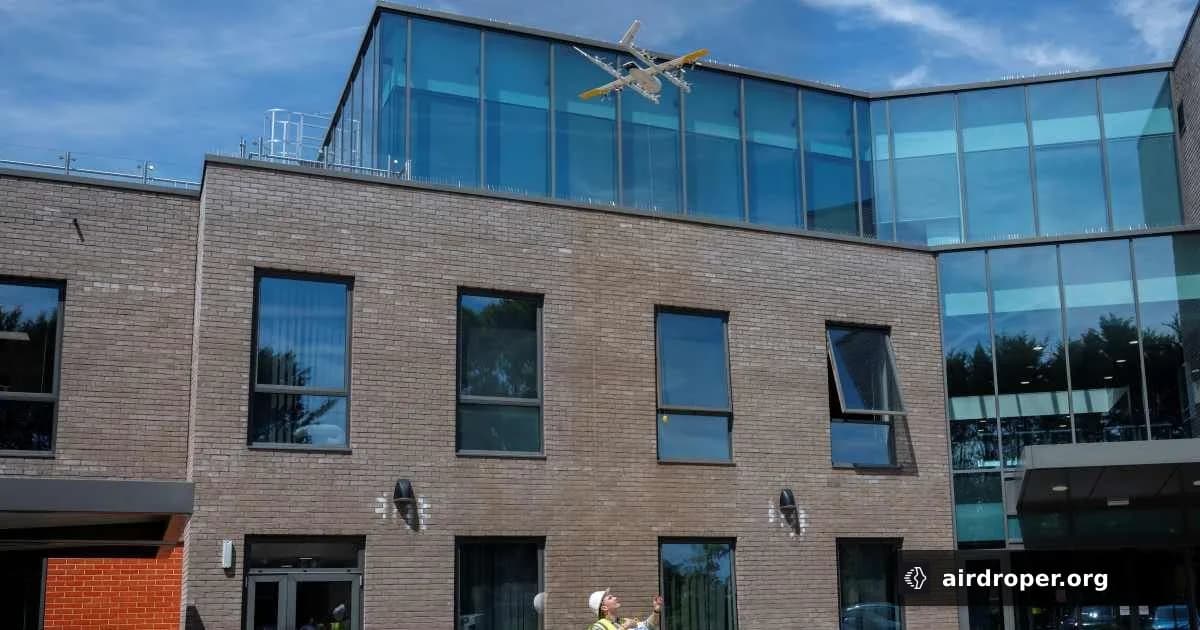
Wing Drones Speed NHS Sample Delivery in London
Drones move from trials to routine healthcare logistics
In the UK, drone delivery is no longer just a pilot project. After a successful trial, the National Health Service has decided to make drone transport of urgent medical samples a permanent part of its logistics network. The use case is straightforward: move samples faster between healthcare locations in London, where every minute can matter for diagnosis and treatment.
Why the pilot mattered
The source report says the trial significantly cut delivery times, and that improvement was enough to support a broader rollout. For a health system, faster transport means more than convenience. It can help shorten turnaround times for testing, reduce pressure on ground transport, and make the whole sample-handling process more efficient.
There is also an environmental angle. By shifting some deliveries away from road vehicles, drones can help lower emissions in a dense urban area. In a city as busy as London, even a limited reduction in van traffic can make medical logistics cleaner and more predictable.
A rollout with real public reach
The expansion could ultimately serve up to 1.8 million people in southwest London. That scale matters. It shows this is not a one-off showcase for aviation technology, but a practical service designed to operate across a large urban population.
For the UAV sector, the NHS case highlights a few trends:
- medical transport is one of the strongest real-world drone applications;
- city operations depend on reliability and integration, not just flight performance;
- measurable service gains matter more than headline-grabbing demonstrations.
Why this matters beyond healthcare
This kind of deployment is important because it shows how drones become valuable when they solve a specific operational problem. In this case, the benefit is not abstract: faster sample movement can support quicker decisions in patient care.
If the programme continues to expand successfully, it could become a model for other urban health systems looking to improve logistics while keeping costs, emissions, and road congestion under control.
Related Posts


Comments
Sign in to leave a comment