
Army’s New Pacific Unit Puts Drones at the Center
A New Force Design for Pacific Operations
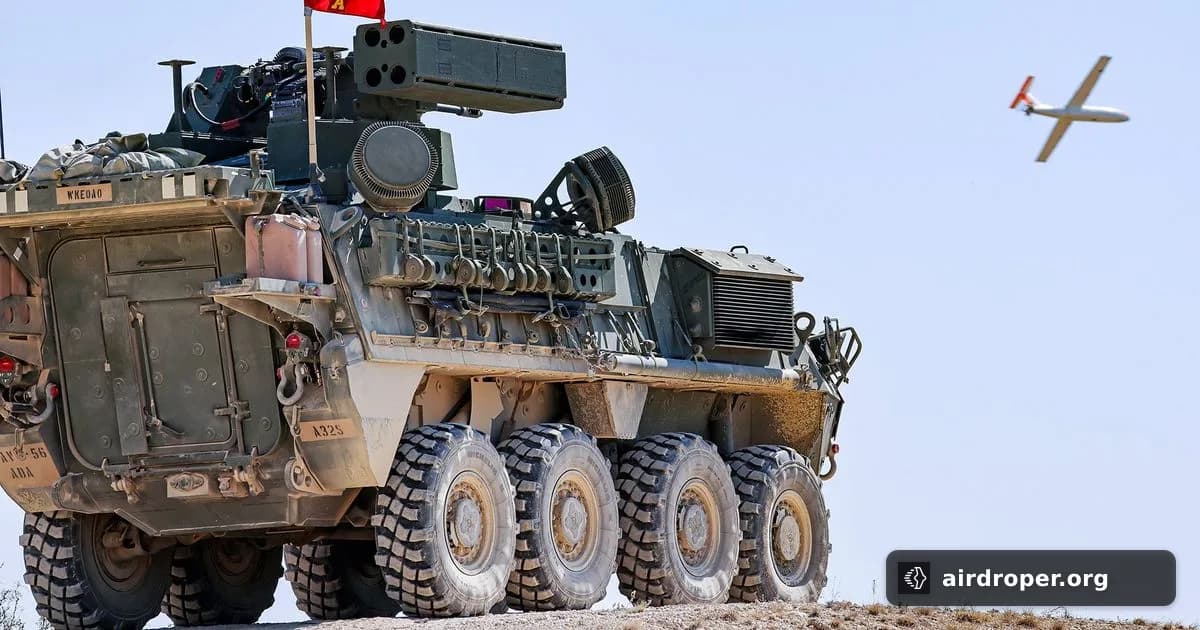
The U.S. Army is building a new unit intended to combine the maneuver speed of Stryker brigades with a much heavier reliance on drones. The 7th Infantry Division Multi-Domain Command – Pacific is being shaped around the idea that unmanned systems are not a supporting feature, but a core part of how the unit fights.
That matters because modern warfare is no longer just about precision strikes. It is also about saturating the battlefield with more sensors, more decision-making speed, and more expendable systems that can stretch an opponent’s defenses. In the Pacific, where distances are wide and logistics are difficult, that approach becomes even more relevant.
Why the Pacific Changes the Equation
The Pacific theater pushes armies to operate farther apart, move faster, and remain effective without easy access to large support structures. That means commanders need better situational awareness and more flexible ways to keep pressure on an adversary.
Drones fit that need well. They can support:
- broad-area reconnaissance;
- target detection and tracking;
- faster maneuver decisions;
- greater battlefield pressure through scale.
In this context, “overwhelm” does not only mean striking harder. It also means forcing the opponent to deal with a constant flow of observations, threats, and changing tactical conditions.
Drones Plus Maneuver
Stryker brigades are valued for their mobility and ability to move quickly across the battlespace. When that mobility is paired with drone networks, the result is a force that can scout routes, identify threats earlier, and support ground movement with better awareness.
This is where the Army’s new concept is especially interesting: drones are not replacing infantry or armored vehicles. Instead, they are extending what those units can see, understand, and respond to in real time.
What This Signals
The creation of a Pacific-focused multi-domain command suggests that militaries are expecting drones to play a systemic role, not just a tactical one. That creates demand for systems that can operate in contested electronic environments, integrate with ground forces, and be fielded quickly.
For the defense industry, the message is clear: the future is not just about a single aircraft. It is about the full stack — the platform, the communications, the control system, and the doctrine that ties them together.
Related Posts

Comments
Sign in to leave a comment