
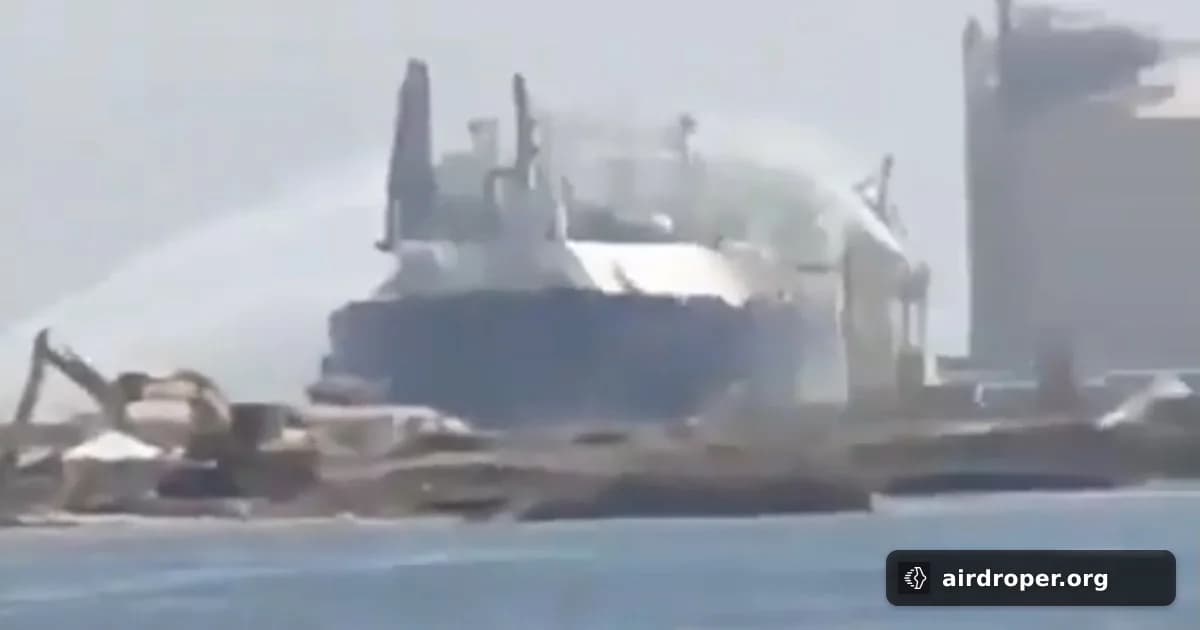
Drone Strike on Egyptian Port Raises Escalation Fears
A strike far from the main battlefield
A drone attack on an Egyptian port on the Mediterranean has drawn attention not only because it happened, but because of where it happened. The target was far from the core conflict area, yet it was still hit at a time when regional tensions were already running high.
According to the available reporting, the strike targeted natural gas tankers. There is still no clear confirmation of who carried out the attack, and several claims have circulated around the incident. That uncertainty is part of the effect: a strike like this sends a signal not just to the immediate parties, but to every state in the region with assets worth protecting.
Why port infrastructure matters
Attacks on ports carry a different weight from strikes on conventional military targets. They can affect logistics, energy supply, and international trade at the same time. That is why even a single drone can change how security is perceived across an entire maritime area.
In this case, the location matters as much as the target. When a conflict appears to spill beyond its usual boundaries, the attack is often read as a message: a warning, a demonstration of reach, or an attempt to test responses. Energy infrastructure makes that message harder to ignore.
What this says about drone warfare
This incident is another reminder that drones are no longer used only for battlefield reconnaissance or direct tactical strikes. They are increasingly part of broader coercive campaigns aimed at infrastructure, shipping, and political signaling.
For regions that depend on critical sea routes, that creates added pressure on port security, maritime logistics, and insurance risk. Even one strike can trigger a response that goes far beyond the physical damage.
The broader concern is escalation. Once attacks start appearing in new countries and against new categories of targets, containing a crisis becomes much harder. A single incident can carry strategic implications well beyond the immediate damage.
Bottom line
The strike on the Egyptian port shows how drone warfare is reshaping conflict beyond the front line. It can be used to signal intent, pressure infrastructure, and expand the geography of confrontation. That is why such incidents are watched closely by military planners, energy operators, and maritime security teams alike.
Related Posts


Comments
Sign in to leave a comment