
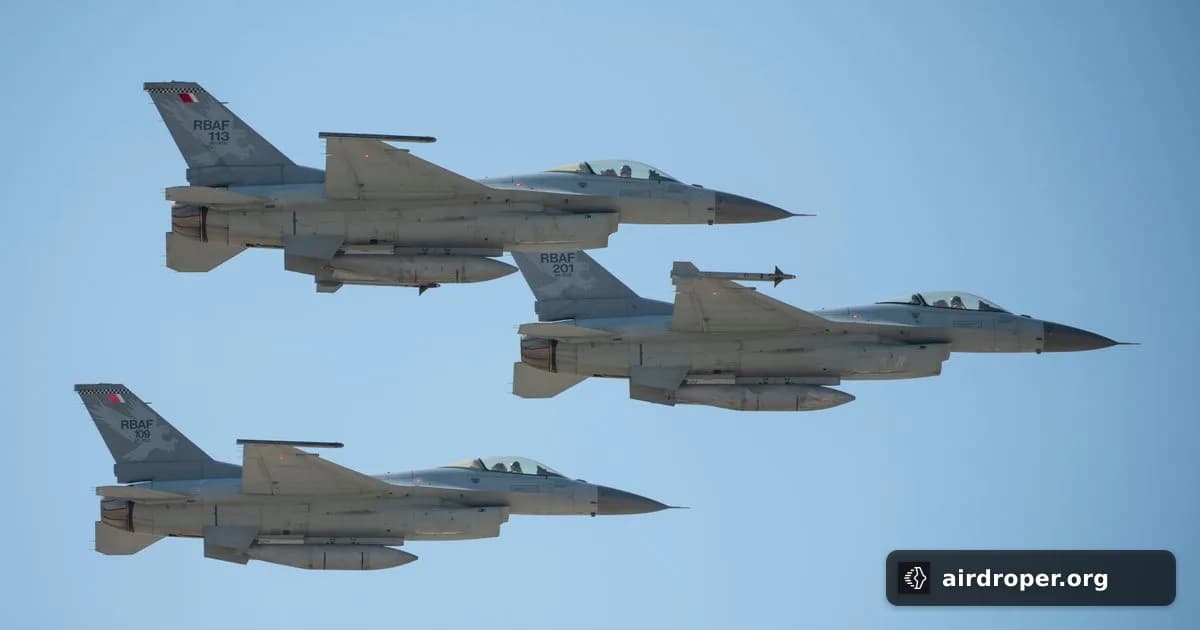
Bahrain Makes History With First F-16 Block 70 Air-to-Air Drone Kills
F-16 Block 70 Records Its First Combat Victories — Against Drones
Bahrain has become the first nation to officially confirm air-to-air kills using the F-16 Block 70, the most advanced production variant of Lockheed Martin's iconic Fighting Falcon. During a recent escalation in the Middle East, Bahraini pilots shot down two Iranian unmanned aerial vehicles, marking a historic first for this next-generation platform.
What Makes the Block 70 Different?
The F-16 Block 70 is far more than an incremental upgrade. Key improvements over earlier variants include:
- The AN/APG-83 AESA radar, delivering dramatically improved target detection and tracking
- Modernized avionics and electronic warfare systems
- An extended airframe service life of up to 12,000 flight hours
- Full compatibility with current-generation air-to-air and air-to-ground munitions
It serves as a capable bridge between legacy fourth-generation fighters and fifth-generation platforms like the F-35.
The Counter-Drone Angle
Using a multimillion-dollar fighter jet to intercept relatively inexpensive drones raises legitimate questions about cost efficiency. A single air-to-air missile can cost more than the drone it destroys. Yet in certain tactical scenarios — protecting naval assets, critical infrastructure, or high-value targets — scrambling a fighter remains a justified response.
This engagement also highlights how AESA radar technology improves detection of low-observable, slow-moving targets like mid-tier UAVs — a capability increasingly relevant as drone threats grow more sophisticated.
Iranian Drones as a Regional Threat
Iranian-origin UAVs have become a persistent element of regional conflict dynamics. Their relatively low cost, operational flexibility, and proven combat record make them attractive tools for both state and non-state actors across the Middle East. The Bahrain incident is a reminder that air defense cannot rely on a single solution.
Beyond the Fighter Jet
The global defense industry is responding with a diverse toolkit: directed energy weapons, electronic warfare jammers, kinetic interceptors, and dedicated counter-UAS systems. Each addresses different threat profiles at different cost points.
What the Bahrain engagement ultimately demonstrates is that drones are no longer a niche concern — they are a mainstream air threat that demands layered, integrated responses. Whether the answer involves a Block 70 or a ground-based counter-drone system depends entirely on the mission context.
Related Posts
Comments
Sign in to leave a comment