
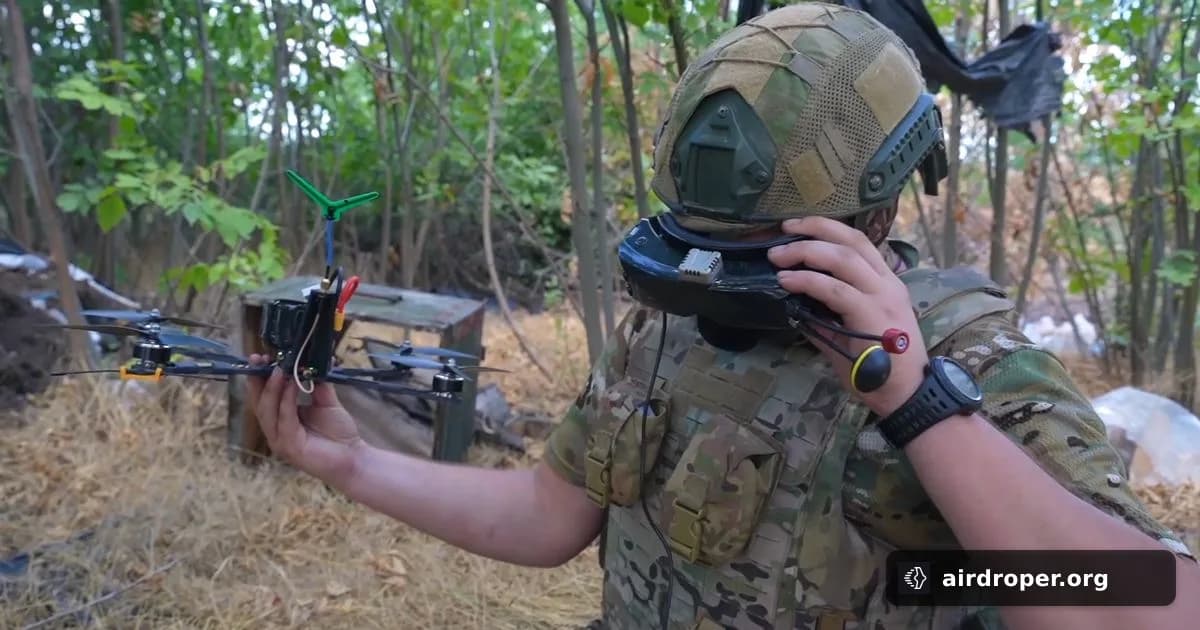
Blackbird Drone Sets a New Speed Benchmark
Blackbird and a New Speed Reference
The Blackbird drone project is a clear example of how far electric flight systems can be pushed when aerodynamics, power delivery, and control are treated as one engineering problem. During testing, the aircraft reached a peak speed of 730 km/h, while the team recorded an average run speed of 685 km/h. Those numbers place the project among the most extreme drone speed efforts seen so far.
A design built for low drag
One of the most interesting details in the project is the use of sawtooth propeller geometry. The idea behind this kind of shaping is to improve airflow behavior and reduce inefficiencies at high speed. For a vehicle operating in a narrow performance window, small changes in blade form and surface interaction can matter as much as raw power.
That focus on efficiency is especially important in fast electric platforms, where excess drag quickly turns into lost speed and extra load on the system. In this case, the record run was not simply a matter of adding more thrust; it was about reducing everything that stands in the way of forward motion.
Record pace, difficult conditions
The achievement came with serious operational challenges. The team had to deal with major video link failures during the attempt, a problem that can become critical when a drone is traveling at extreme speed. At those velocities, the pilot has very little margin for error, and any interruption in the control picture can instantly turn a run into a recovery exercise.
The weather also made the effort harder, adding another layer of difficulty to an already high-risk test. In that sense, the final result says as much about system resilience as it does about speed.
Why this matters for UAV development
High-speed drone projects are often viewed as spectacle, but they also serve a practical purpose. They test the limits of:
- aerodynamic efficiency
- power-to-weight balance
- control reliability under stress
Lessons from projects like Blackbird can influence future UAV designs where speed and stability must coexist. Even when the final application is not record chasing, the same engineering priorities remain relevant: clean airflow, dependable links, and predictable handling.
Final takeaway
Blackbird’s result shows that record-breaking drone performance is still evolving. It also underlines a familiar truth in UAV engineering: the faster the platform, the less room there is for weakness anywhere in the system.
Related Posts

Comments
Sign in to leave a comment