Bradley and Ground Drone Swarms: A New Role
Bradley as a launcher for ground drones
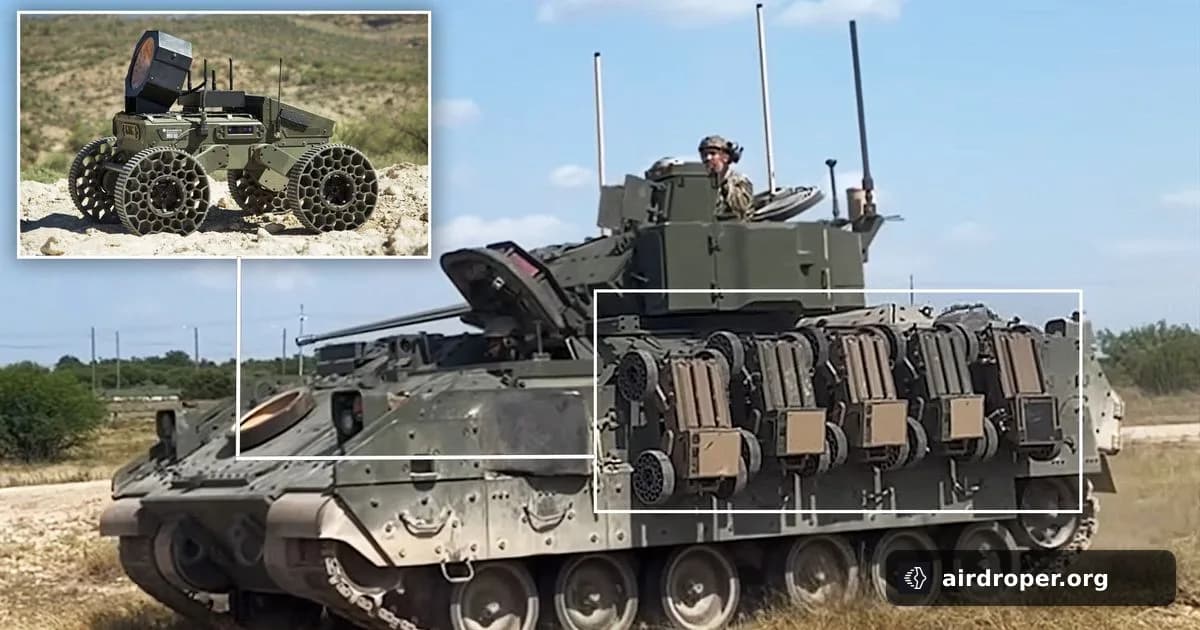
Using the Bradley Fighting Vehicle as a carrier for a swarm of uncrewed ground vehicles points to a broader shift in land warfare. A tracked infantry fighting vehicle is no longer just a transport platform for troops and firepower — it can also become a mobile node for scouting and strike support.
That matters because small robotic ground systems can extend the reach of an armored unit without putting the crew in the most dangerous places first. Instead of relying only on onboard sensors, a Bradley could deploy multiple compact drones ahead of the formation to probe terrain, inspect cover, and help build a clearer picture of what lies in front of the unit.
Why swarming ground drones matter
The appeal is straightforward: a single vehicle can send out several machines with different roles, increasing the number of options available to commanders.
- Forward reconnaissance — small ground drones can check routes and suspicious areas before the main force moves.
- Lower risk for crews — the manned vehicle can stay back from the most exposed positions.
- More tactical flexibility — robotic systems can support both observation and contact with the enemy.
- Distributed effects — sensing and action are spread across multiple platforms, not concentrated in one vehicle.
This is the key change. Rather than treating armor as a standalone object, modern armies are moving toward a networked approach where the vehicle, its drones, and its operators work as one system. That makes the unit harder to predict and gives it more ways to adapt during combat.
A sign of where ground combat is heading
Ground drones are still emerging, but the direction is clear. Militaries want ways to operate in contested environments without forcing every task onto a manned vehicle. Uncrewed systems can help reduce exposure, improve situational awareness, and speed up decisions.
A Bradley carrying a load of swarming ground drones is therefore more than a technical curiosity. It reflects a growing belief that future land warfare will depend on the mix of armored mobility, autonomy, and machine-to-machine coordination.
Bottom line
The Bradley is a useful example of how a legacy fighting vehicle can gain a new mission set without being replaced outright. For commanders, that means more reconnaissance options, more pressure on the adversary, and less risk for personnel at the front.