
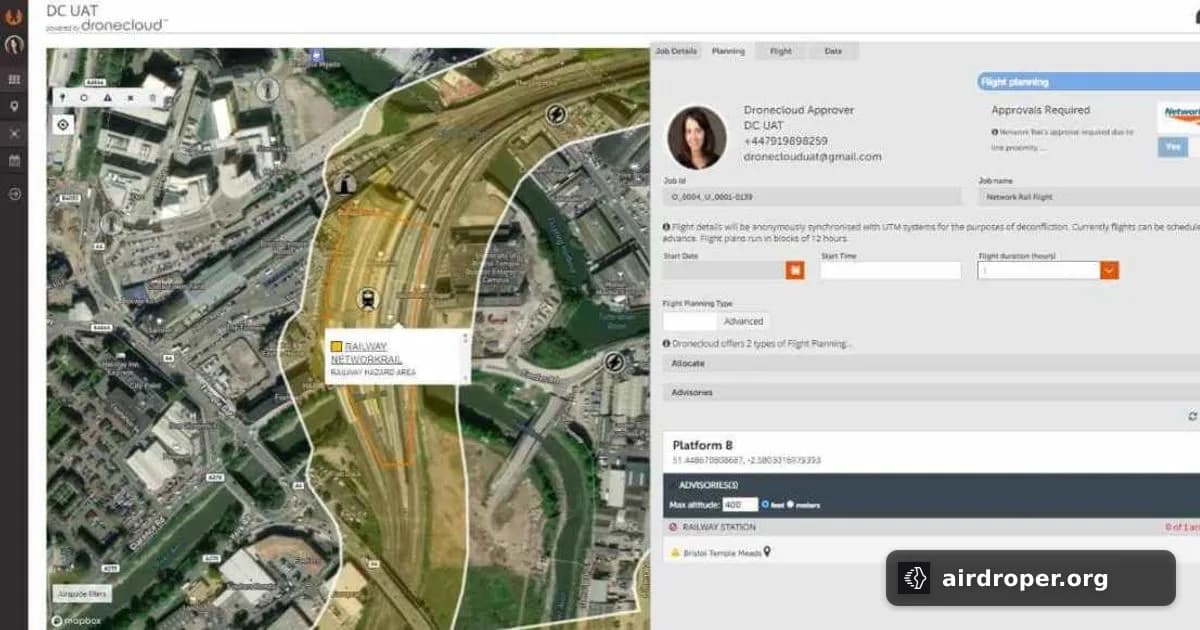
NATS, DroneCloud and Network Rail Trial Drone Access
What this trial signals for drone operations
NATS, DroneCloud and Network Rail have completed a project focused on a practical question facing the drone sector: how can UAVs operate near critical infrastructure with the right balance of access, safety and oversight?
As drone use expands beyond open fields and into inspection, monitoring and emergency workflows, the challenge is no longer only about flight performance. The bigger issue is how to integrate drones into tightly controlled environments where permissions, coordination and operational clarity matter just as much as the aircraft itself.
Why critical infrastructure changes the rules
Infrastructure sites are not ordinary flying locations. They often involve strict access controls, layered safety requirements and multiple stakeholders responsible for different parts of the operation. That makes drone missions more useful — but also more complicated.
Projects like this are designed to test how those barriers can be reduced without weakening control. The goal is not to remove restrictions altogether. It is to create a more workable system where flight authorisation, situational awareness and site protection can coexist.
The practical value of trials like this
Even when a trial does not lead to immediate rollout, it can still shape future drone operations in meaningful ways:
- more efficient inspections with faster access to site data;
- clearer coordination between operators and infrastructure owners;
- less administrative friction in routine missions;
- better operational planning in restricted environments.
For drone teams, that can mean less time spent navigating permissions and more time focused on mission execution. For infrastructure managers, it offers a path to use drones as a tool without losing control over sensitive assets.
A step toward structured integration
The significance of this project is less about a single test and more about the direction it points to. Drone operations are increasingly moving from experimental use toward structured, regulated integration into complex environments.
That shift will likely depend on digital platforms, shared procedures and closer coordination between operators, regulators and site owners. In that sense, this trial is part of a broader industry pattern: drones are becoming useful not only because they can fly, but because systems around them are learning how to support them.
For the UAV sector, that is where the next major progress may come from — not just better aircraft, but better frameworks for operating them where it matters most.
Related Posts
Comments
Sign in to leave a comment