
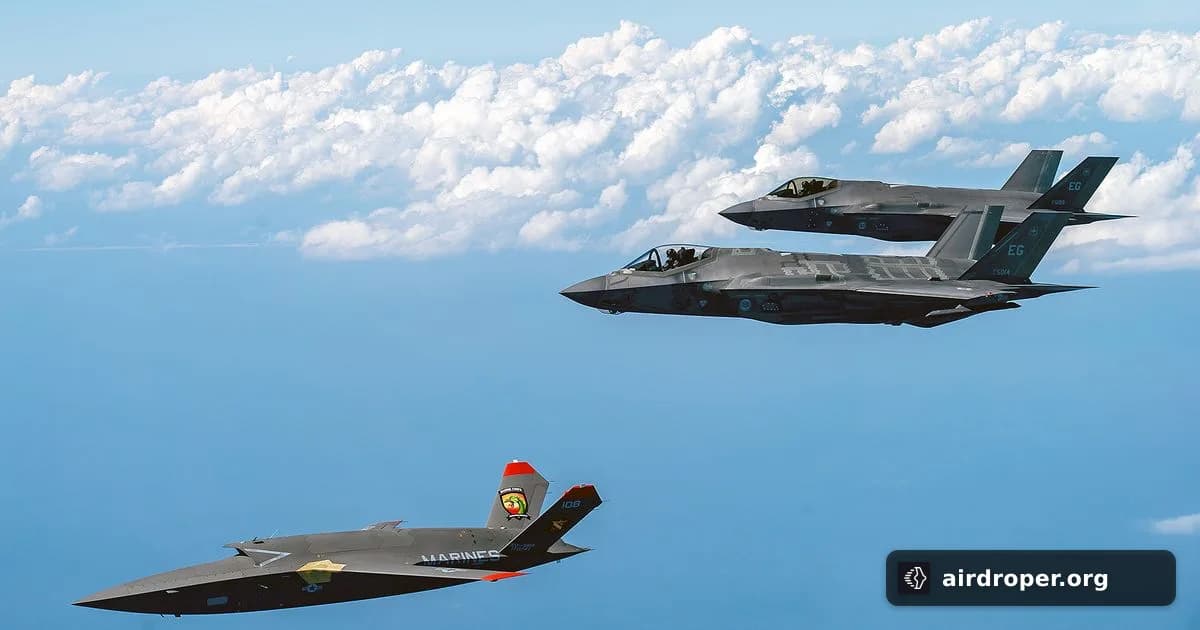
F-35 Leading Drones Into Battle: How the USMC Is Bridging to 6th-Gen Fighters
A New Kind of Airpower: Piloted Jets Leading Drone Wingmen
The U.S. Marine Corps is moving steadily toward a future where F-35 fighters don't just fight — they also direct. Under the Collaborative Combat Aircraft (CCA) concept, advanced stealth jets take on a command-and-control role, guiding autonomous or semi-autonomous drone wingmen through complex combat scenarios.
This isn't science fiction. It's a deliberate strategic pathway that the Marines see as a bridge to the next generation of fighter aviation.
What CCA Actually Means in Practice
Collaborative Combat Aircraft are unmanned systems designed to operate alongside crewed platforms, receiving real-time tasking from a human pilot acting as a tactical quarterback. The F-35, with its advanced sensor fusion and data-link architecture, is a natural candidate for that lead role.
Key advantages of this approach include:
- Reduced pilot exposure during high-threat missions
- Extended sensor and weapons reach without increasing crewed aircraft numbers
- Operational flexibility from ships, expeditionary airfields, and forward bases
The Road to F/A-XX
For the Marine Corps, CCA isn't just a near-term capability — it's a training ground for what comes next. The Navy's F/A-XX program is developing a sixth-generation stealth multirole fighter, and the operational lessons learned from F-35-led drone teaming today are expected to feed directly into its design and doctrine.
In other words, every mission where an F-35 pilot manages drone wingmen is a data point that shapes the architecture of tomorrow's fighter.
The Doctrinal Question
Beyond the hardware, there's a deeper challenge: redefining the role of the pilot. When a single aviator is simultaneously flying a stealth jet and directing multiple autonomous platforms, the cognitive demands — and the tactical possibilities — change fundamentally.
The Marine Corps must develop not only the technology but also the training frameworks, rules of engagement, and command structures to make this vision operational.
Looking Ahead
The F-35-as-quarterback concept signals a broader shift in military aviation: the gradual blurring of the line between crewed and uncrewed systems. By investing in CCA now, the USMC is building the operational vocabulary and institutional knowledge that will define air combat in the decades ahead.
Related Posts
Comments
Sign in to leave a comment