
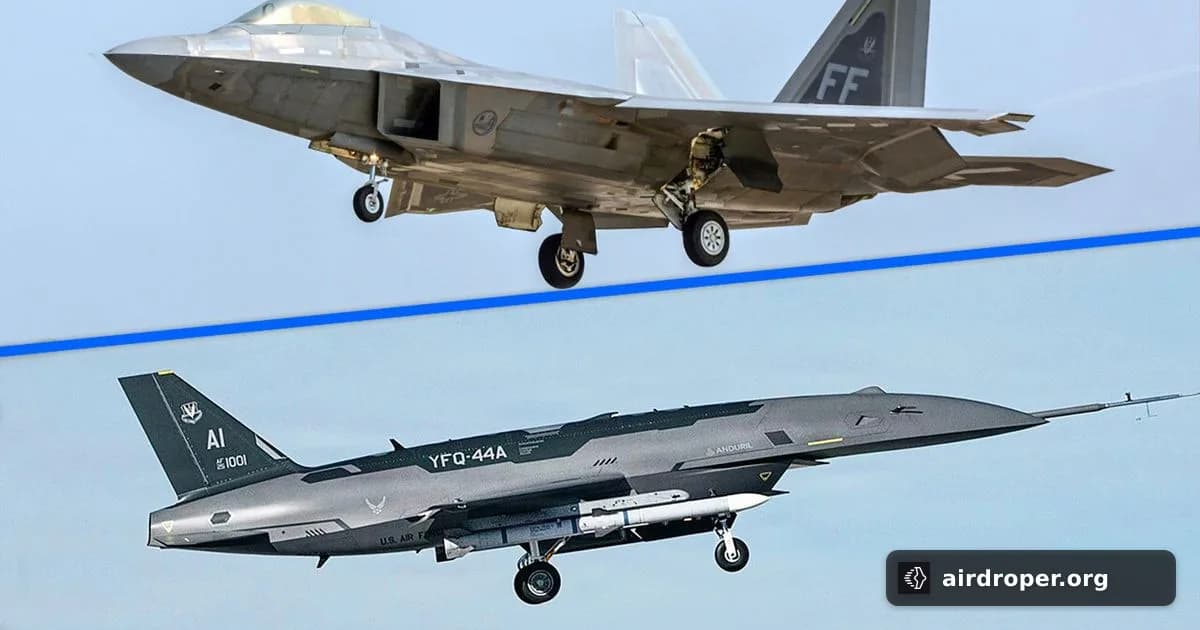
F-22 Pilot Controls FQ-44 Drone From the Cockpit
A new role for the F-22: controlling drones in the air
The U.S. Air Force has reached another milestone in its push toward manned-unmanned teaming. In a recent test, an F-22 pilot controlled the FQ-44 fighter drone directly from the cockpit for the first time.
That matters because the service is building a concept where piloted fighters will act as airborne controllers for Collaborative Combat Aircraft. In practice, that means a crewed jet can manage one or more uncrewed aircraft while keeping the tactical picture in view and handling the overall mission.
Why this test matters
This is not just a demonstration of remote control. It is a proof point for a larger operational model. If a pilot in a fighter jet can reliably direct a drone from the cockpit, the Air Force gains more flexibility in how it organizes missions and may reduce dependence on separate ground-based control stations.
The F-22 is especially significant here because it is being positioned as an early “quarterback” for future combat drones. That role could make the fighter a central node in a distributed air combat system, with crewed aircraft and autonomous or semi-autonomous platforms working together.
What it signals for UAV development
The broader message is clear: drones are increasingly being designed as networked combat assets rather than standalone aircraft. For UAV developers and avionics teams, that raises the bar.
Future platforms will need dependable communications, strong resistance to interference, and seamless integration with crewed aircraft. Speed of response and ease of mission coordination will matter just as much as flight performance.
Tests like this are shaping the next phase of military UAV design — one where a drone is not only capable of flying on its own, but also able to operate as part of an air combat team directed from another aircraft.
Related Posts
Comments
Sign in to leave a comment